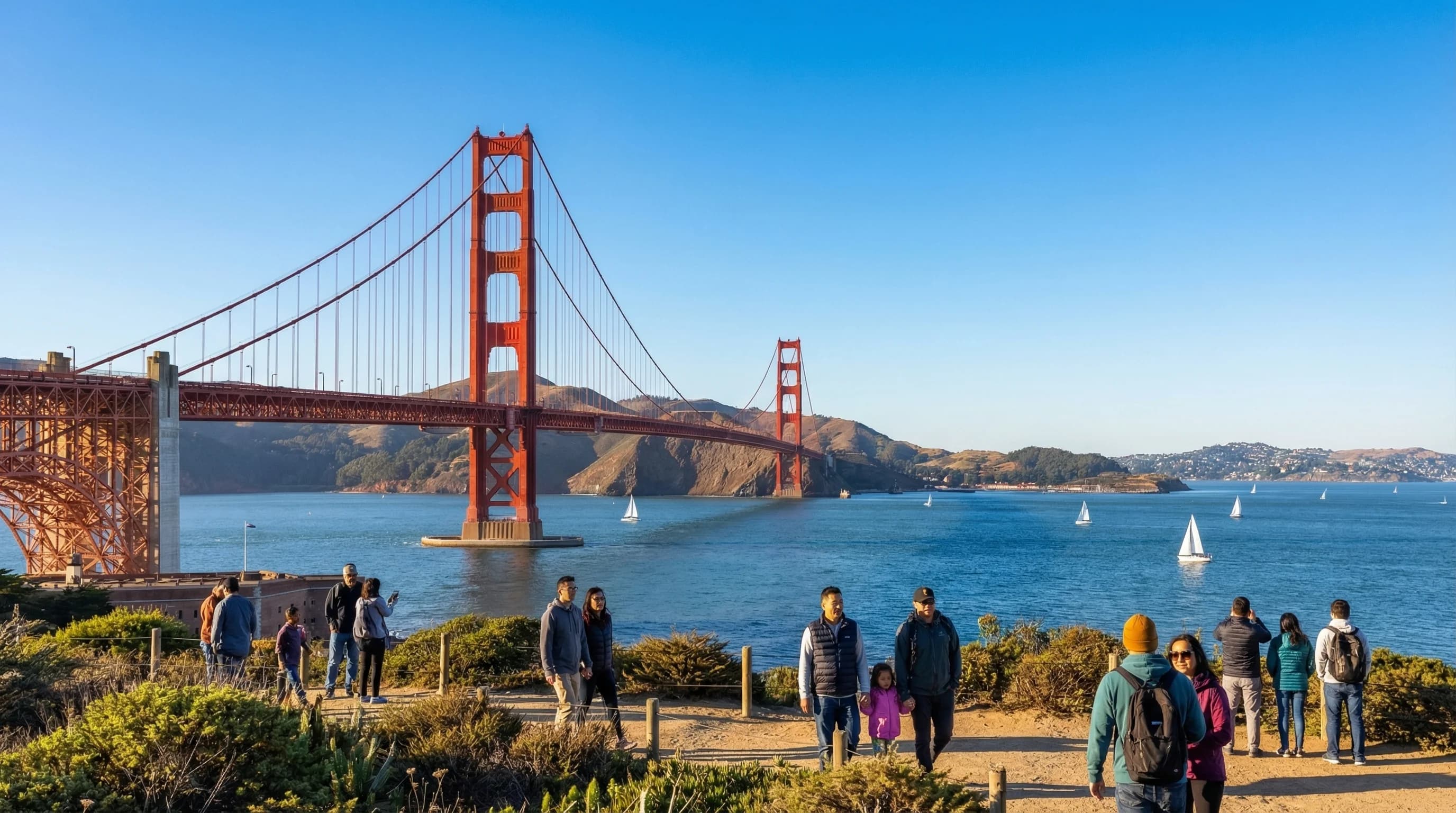
The Golden Gate Bridge is one of the most photographed structures in the world, and also one of the most reliably fog-obscured tourist attractions in North America. The bridge spans the strait between San Francisco and the Marin Headlands at precisely the point where the marine layer flows through most persistently, the gap in the Coast Ranges that channels Pacific fog into the Bay every afternoon in summer. If you visit on the wrong day at the wrong time, you will see nothing but a couple of orange towers poking through white cloud. If you go on the right day at the right time, you will see one of the great views in American landscape photography. The difference between these two outcomes is largely a matter of planning.
The Fog Problem and the Golden Gate
The Golden Gate Strait is the primary channel through which the summer marine layer flows from the Pacific into San Francisco Bay. The bridge crosses this strait at its narrowest point. As the marine layer rolls in from the west each afternoon, it passes directly over and around the bridge, frequently obscuring the towers entirely. The phenomenon is so common that Karl the Fog, San Francisco's personified marine layer, has become associated with the bridge more than almost any other Bay Area landmark.
The fog at the bridge is most dense in the late afternoon and evening, when the marine push is at its strongest. Summer mornings before about 10am often see the bridge clear, with the marine layer still offshore or just beginning its inland push. As the day progresses and the thermal low over the interior valley strengthens, the fog accelerates through the strait and the bridge disappears. By 3pm on a typical July day, the bridge towers are often completely invisible from the Marin Headlands viewpoint.
Best Times by Season
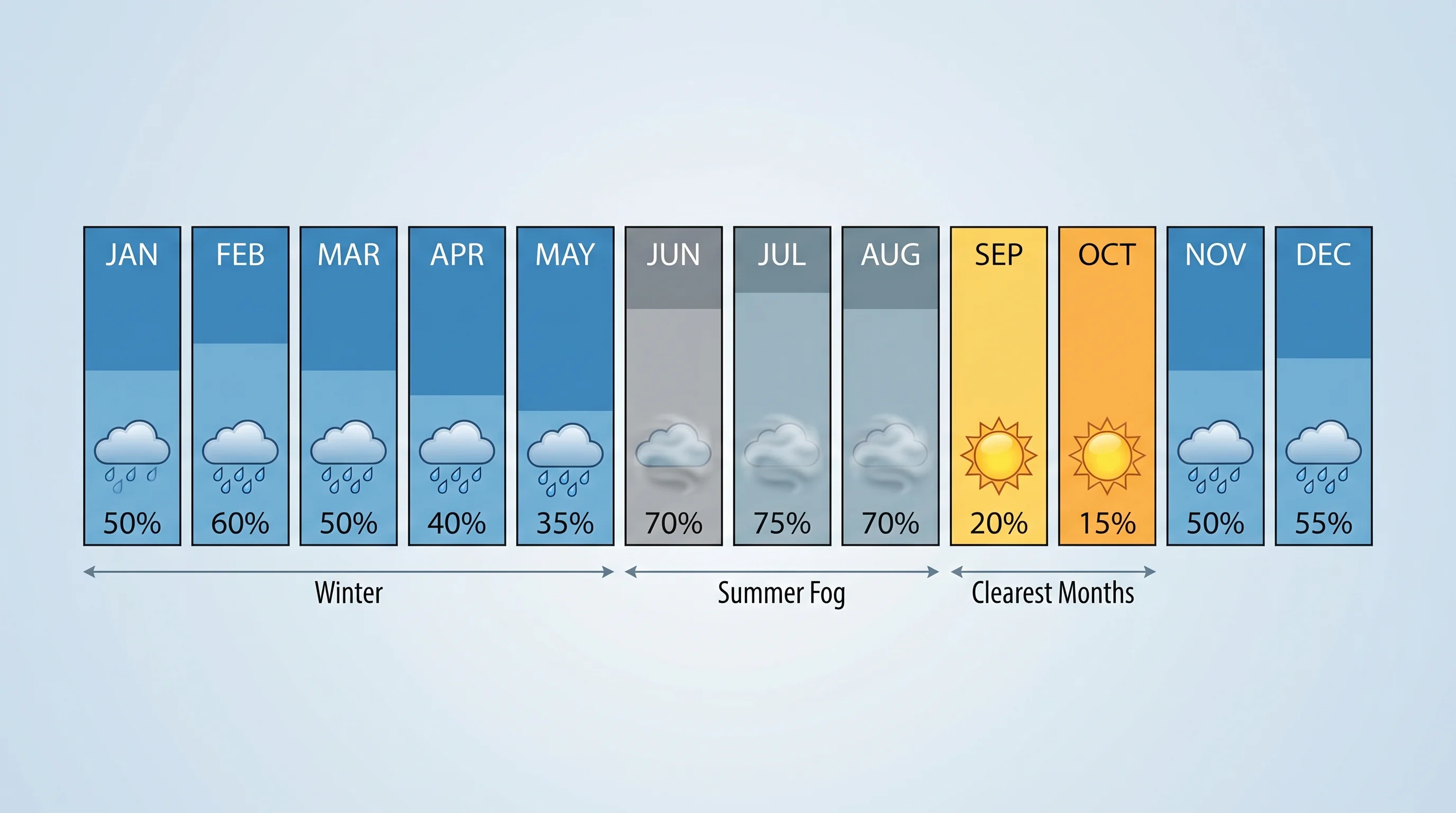
The best season for clear bridge views is fall: September through November. Indian summer weakens the marine layer, mornings clear early, and the low sun angle produces warm golden light on the structure in the late afternoon. October is the single best month for clear, well-lit views. The marine layer is at its annual minimum, temperatures are comfortable, and the afternoon sun lights the bridge from the southwest in a way that makes it glow against the hills of the Marin Headlands.
Spring, April and May, offers a secondary window. The marine layer is building toward its summer peak but has not yet established the daily afternoon pattern that dominates June through August. Spring mornings are often clear and mild, and the green winter hills in the background make for dramatically different photography than the golden summer hills of fall. The trade-off is less predictability: a late-season storm or an early marine push can cloud in the bridge without warning.
Summer, June through August, is the hardest season for clear bridge views and the most common time when visitors are disappointed. Morning visits before 10am give the best odds. By afternoon, the marine layer is almost universally present at the bridge and often thick enough to completely obscure the towers.
Best Viewpoints and Their Fog Exposure
The Marin Headlands viewpoints north of the bridge (Battery Spencer, Hawk Hill) offer the most dramatic views but also the most direct fog exposure. When fog is flowing through the strait, these viewpoints are inside it. The advantage is that dramatic partial-fog shots, towers emerging from a sea of white, are most accessible from here. The Fort Point viewpoint beneath the southern end of the bridge gives a different angle and sits at sea level, often below the fog ceiling when the marine layer is at medium thickness.
The Twin Peaks viewpoint in San Francisco offers a wider panoramic view from higher elevation and from the fog shadow of the hills east of the bridge. On days when the strait itself is fogged in, Twin Peaks can be in sunshine with a view of the fog flowing under the bridge from above, a perspective that shows the bridge and the marine layer together in a way that no ground-level viewpoint can replicate.
The practical advice for visiting the bridge is simple: go in the morning or go in October. Check the forecast for fog the night before; the National Weather Service issues marine layer forecasts that are fairly accurate 12 to 24 hours out. If you see "dense fog advisory" or "areas of fog through afternoon," your afternoon bridge visit will be obscured. If you see "fog clearing by late morning," an early visit will be rewarded with clear skies and ideal light.