seasonalsafetyclimate science

Record-Breaking Heat in the Bay Area

By SFBayWeather||Updated |6 min read
Record-Breaking Heat in the Bay Area

Key Takeaways

  • San Francisco's all-time heat record of 107°F was set on September 9, 2022, breaking the previous record of 106°F set in 2017, which had already broken a record from 1961.
  • Inland East Bay cities like Livermore and Concord have recorded temperatures above 115°F during major heat dome events when the marine layer is completely suppressed.
  • Bay Area heat records are disproportionately dangerous because fewer than half of households have air conditioning, as the climate historically made it unnecessary.
  • The 20-30°F temperature difference between coast and inland East Bay during normal summers becomes 40-50°F during record heat events, amplifying the microclimate gradient.
  • Extreme heat records in the Bay Area are becoming more frequent as rising background temperatures reduce the marine layer's cooling buffer.

The Bay Area's climate is defined by moderation: cool summers, mild winters, and the persistent marine layer that prevents the extremes common to most of California. But the record books tell a different story: temperatures that seem impossible for a region known for fog and sea breezes. San Francisco has officially exceeded 100 degrees. Inland East Bay cities have recorded 115 degrees or above. These are not statistical artifacts or measurement errors; they are the upper boundary of what the Bay Area's weather can produce when all the heat-driving mechanisms align simultaneously. Understanding the record heat events reveals the limits of the marine layer's protection and, increasingly, the direction in which the climate is moving.

San Francisco Heat Records

San Francisco's all-time high temperature record has been broken twice in the modern era. For decades, the record stood at 101 degrees, set on June 14, 1961. That was broken on September 1, 2017, when San Francisco recorded 106 degrees, a number that seemed implausible for a city most associated with summer fog and sweaters. The 2017 event occurred during a Diablo wind event following an intense heat wave, with offshore flow replacing the marine layer with hot interior air.

The more recent San Francisco record was set on September 6, 2022, when the city recorded 107 degrees at the official measuring station. The 2022 heat dome was notable for its duration as well as its intensity: the marine layer was suppressed for multiple consecutive days, allowing temperatures to build without the normal overnight marine recovery. The event caused multiple power outages across the Bay Area, overwhelmed hospital emergency departments, and closed outdoor venues throughout the region.
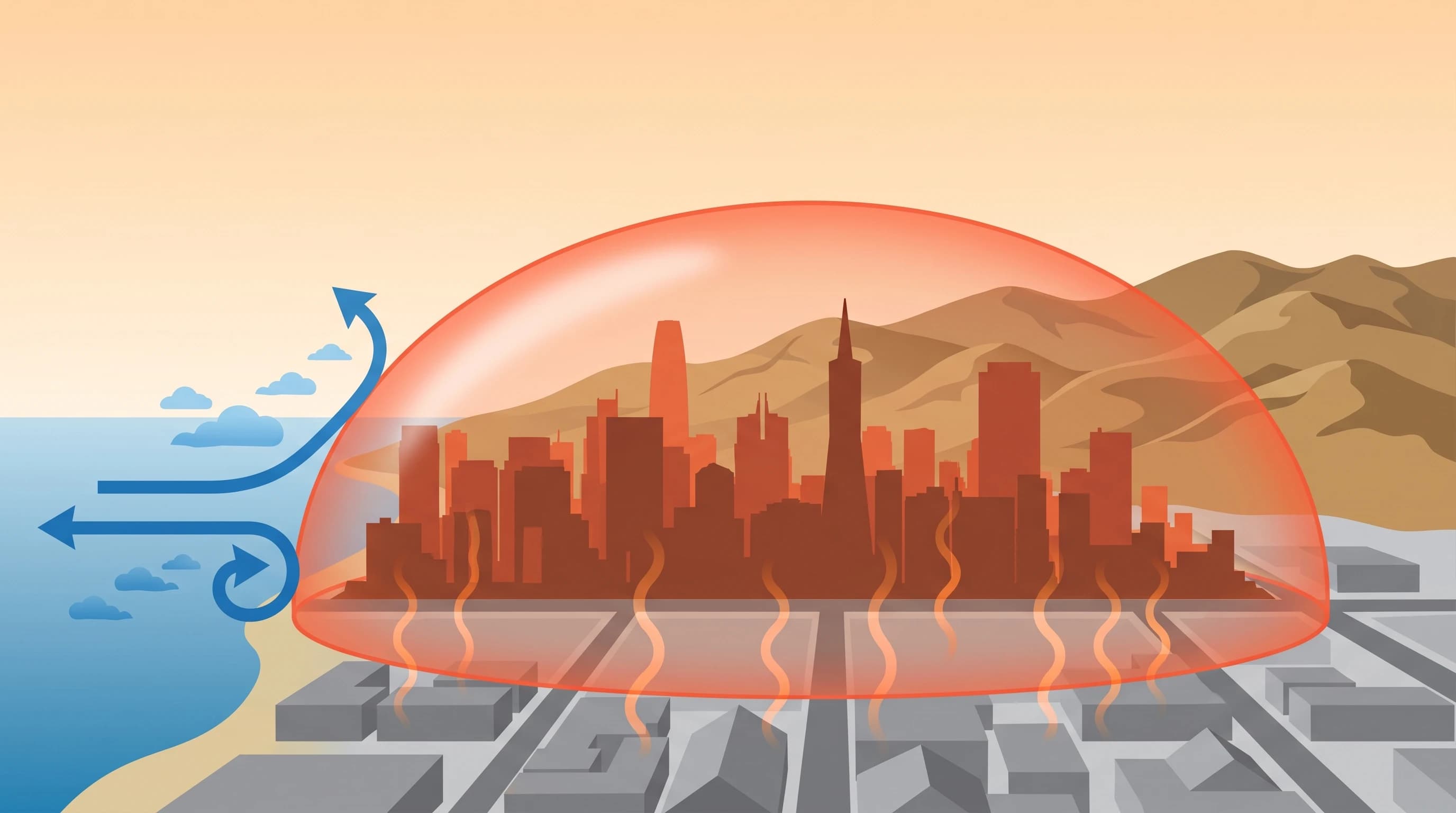
Bay Area thermometer showing extreme temperature on a heat dome day, with brown dry hills in the background, heat shimmer visible, no fog
San Francisco's all-time heat record of 107°F was set in September 2022 during a multi-day heat dome that suppressed the marine layer and allowed temperatures to build without overnight recovery. Inland East Bay cities reached 115°F during the same event.

Inland Bay Area Heat Records

The inland East Bay cities record temperatures significantly higher than the coast during extreme heat events. Livermore has recorded temperatures above 115 degrees. Concord, Walnut Creek, and Antioch regularly exceed 110 during major heat waves. These records are set when the combination of maximum solar heating, minimal sea breeze, and Diablo offshore flow compounds the heat in the sheltered inland valleys.
Scientific illustration explaining Record-Breaking Heat in the Bay Area

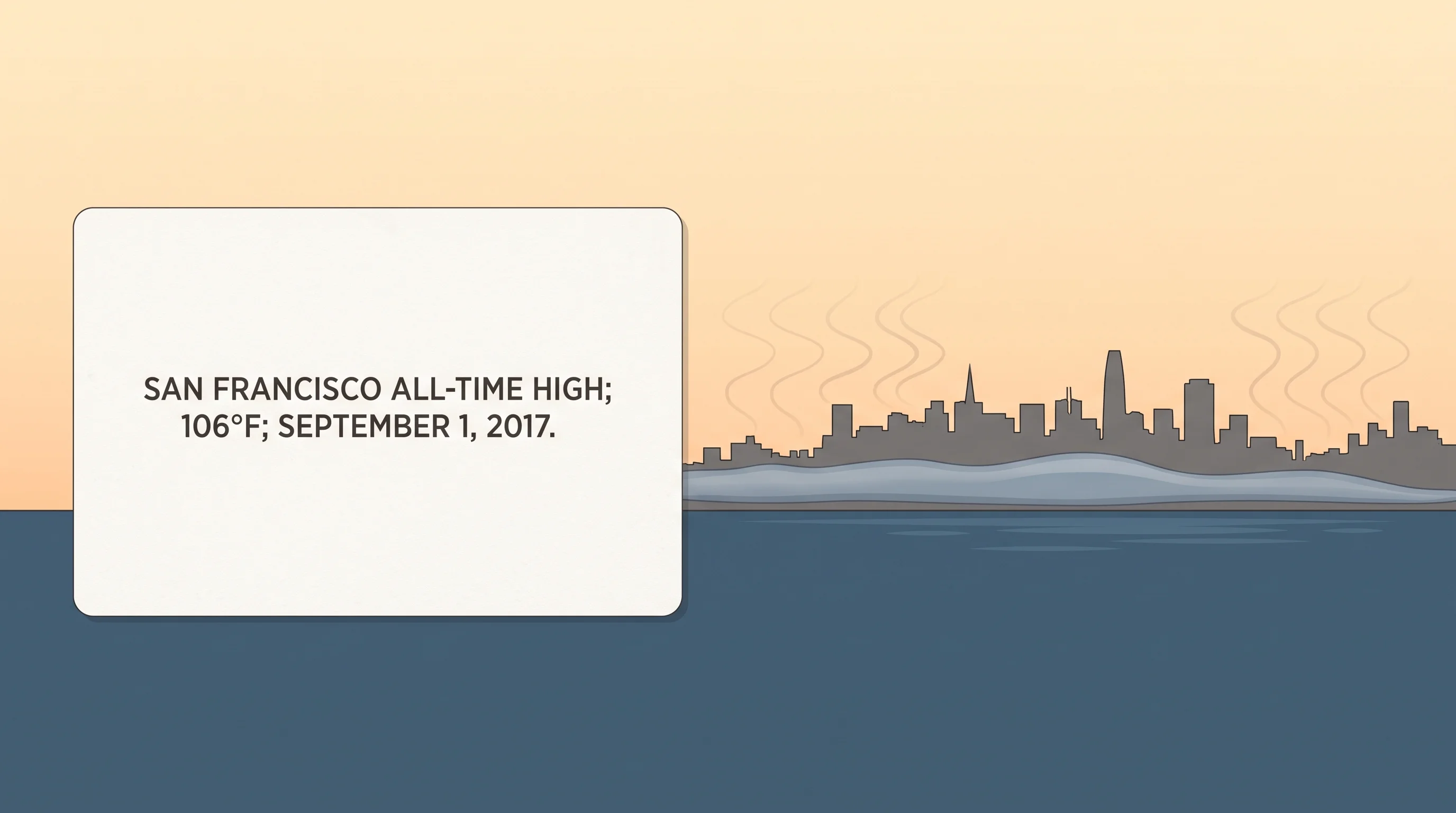
The geographic pattern of Bay Area heat records reveals the marine layer's influence. Moving from the coast to the inland valleys, record temperatures increase by 20 to 30 degrees over distances of 30 to 40 miles. Inland East Bay cities like Livermore and Concord recorded temperatures approaching or exceeding 115°F during the same September 2022 event, dramatically higher than the San Francisco record, because they lack marine exposure even though they are part of the same metro area. The gradient from coast to inland that characterizes normal Bay Area weather is amplified during record events.

Heat Records and Human Health

Bay Area heat records are disproportionately dangerous compared to regions where extreme heat is expected. Fewer than half of Bay Area households have air conditioning, because the climate historically made it unnecessary. During extreme heat events, cooling centers open throughout the region, but they require transportation to reach and may not be accessible to the most vulnerable populations. The 2006 California heat wave, which broke records across the state, is estimated to have caused more than 600 excess deaths statewide.

Heat records are becoming more frequent. The pattern of marine layer suppression that produces extreme coastal temperatures, once a rare occurrence, has become more common as sea surface temperatures rise and the atmospheric dynamics that drive heat domes intensify. Climate models consistently project that extreme heat events in the Bay Area will increase in frequency, severity, and duration through the century, eventually making air conditioning a practical necessity for the coastal cities that have historically not needed it.

Frequently Asked Questions

What is the hottest temperature ever recorded in San Francisco?

107°F, set on September 9, 2022, at the official NWS measuring station. This broke the previous record of 106°F set on September 1, 2017, which had itself broken a record of 101°F from 1961. All three records occurred during heat dome events when the marine layer was suppressed and Diablo winds brought hot interior air to the coast.

What is the hottest temperature ever recorded in the Bay Area?

Livermore, Concord, and other inland East Bay cities have recorded temperatures above 115°F during major heat dome events. The inland Bay Area record is not as clearly documented as the San Francisco record because there are more monitoring stations with varying histories, but the 2020 heat dome and 2022 heat dome both produced temperatures above 115°F in the inland East Bay valleys.

Why are Bay Area heat records dangerous?

The Bay Area's normally mild climate means fewer than half of households have air conditioning. The population is acclimatized to cool summers and has limited infrastructure for extreme heat. During record events, cooling centers may be overwhelmed, power grids can fail under unexpected air conditioning loads, and vulnerable populations face acute health risks. The 2006 California heat wave killed more than 600 people statewide, with the Bay Area among the most affected regions.

How do record heat events affect Bay Area wildfires?

Record heat events are directly linked to catastrophic fire seasons. Extreme heat desiccates vegetation to critically low moisture levels, and the fire season risk peaks when record heat combines with Diablo offshore winds and dry conditions. The 2020 record heat dome directly triggered the Lightning Siege. The 2017 heat events that preceded the October Tubbs Fire helped create the desiccated fuel conditions that made the fire spread so explosively when Diablo winds arrived.

What should Bay Area residents do during record heat events?

Stay hydrated and find air conditioning during the peak afternoon hours (noon to 6 p.m.), when temperatures are highest. Community cooling centers open during extreme heat events; libraries, community centers, and public buildings. Check on elderly neighbors and family members without AC. Avoid strenuous outdoor activity between 10 a.m. and 6 p.m. At night, open windows to flush warm air out when outdoor temperatures drop below indoor temperatures; the Bay Area's nights cool more than other California regions even during heat events, providing some overnight relief.

Live Bay Area Conditions

Compare fog, temperature, wind, and comfort across the map.

See which microclimates are clear, cool, windy, or warming up right now.

Open the Weather Map
🔒Privacy Policy📄Terms of Service