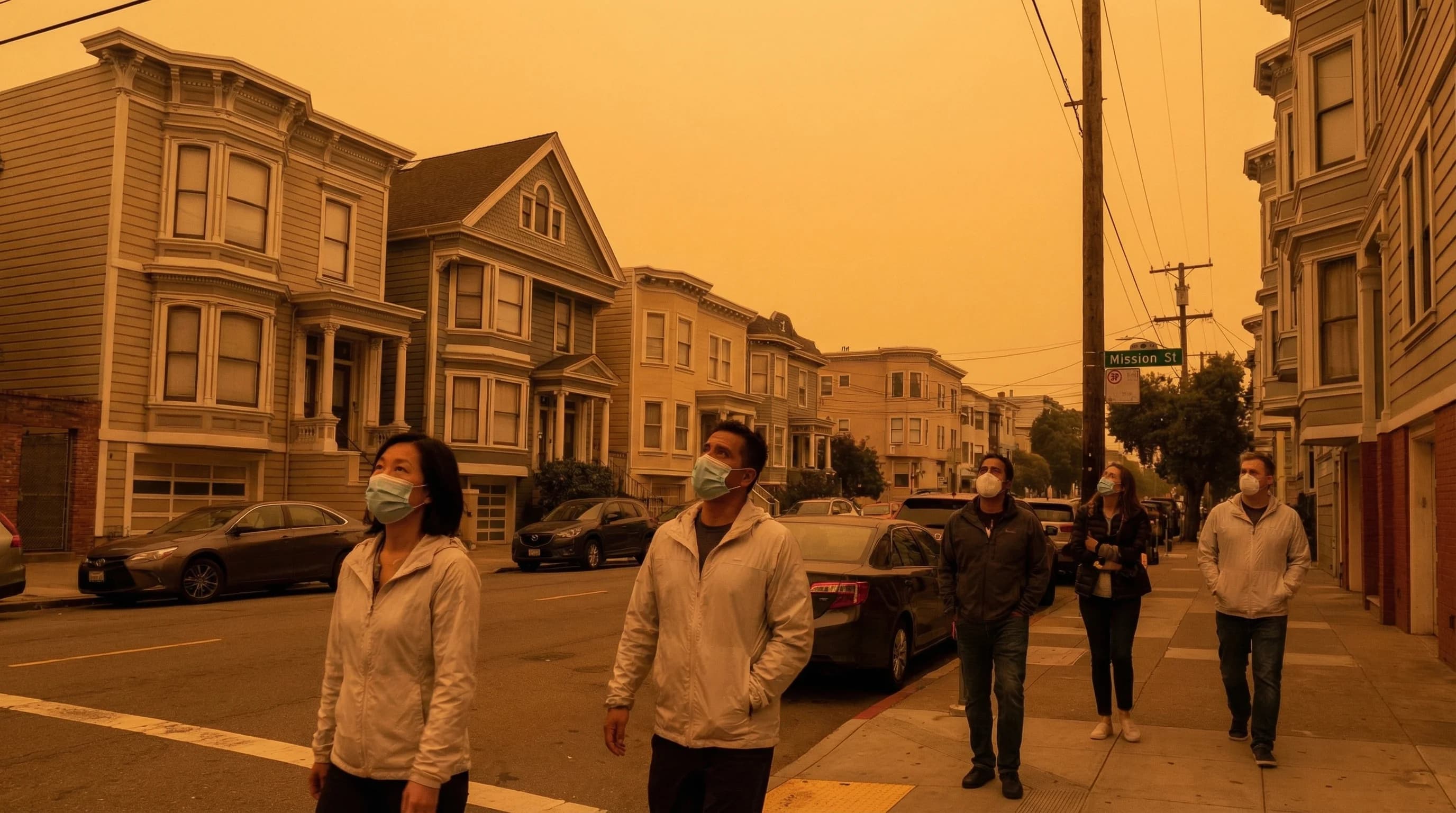
The third week of August 2020 broke temperature records across California that had stood for decades, triggered the largest mass ignition of wildfires in California history, and produced environmental conditions that much of the state had never experienced and had no infrastructure to handle. The 2020 heat dome was not just an extreme weather event; it was a simultaneous assault on multiple critical systems. While temperatures soared, the sky filled with smoke from 560 simultaneous fires. While the power grid strained under unprecedented cooling demand, rolling blackouts cut power to homes and businesses across the Bay Area. The event became a template for what climate scientists and emergency managers fear the region will face with increasing frequency.
The Meteorology of the 2020 Heat Dome
The August 2020 heat dome developed when a high-pressure ridge built over the Great Basin and extended westward over California. The ridge was exceptionally strong and stationary, which meant the normal mechanism that breaks heat waves, the passage of a trough of low pressure pushing through from the north, was delayed for an extended period. The marine layer, which normally cools the Bay Area's coast every summer afternoon, was suppressed or pushed far offshore. Without the sea breeze and marine layer, temperatures built day after day with minimal overnight recovery.
The heat was remarkable even for California. Concord reached 116 degrees. Livermore recorded 115 degrees. San Jose hit 105. Santa Rosa recorded 111 degrees. Even San Francisco, which had only exceeded 100 degrees a handful of times in recorded history, reached into the mid-90s and above. Death Valley, California, broke the world record for reliably measured temperature, reaching 130 degrees on August 16.
The Lightning Siege
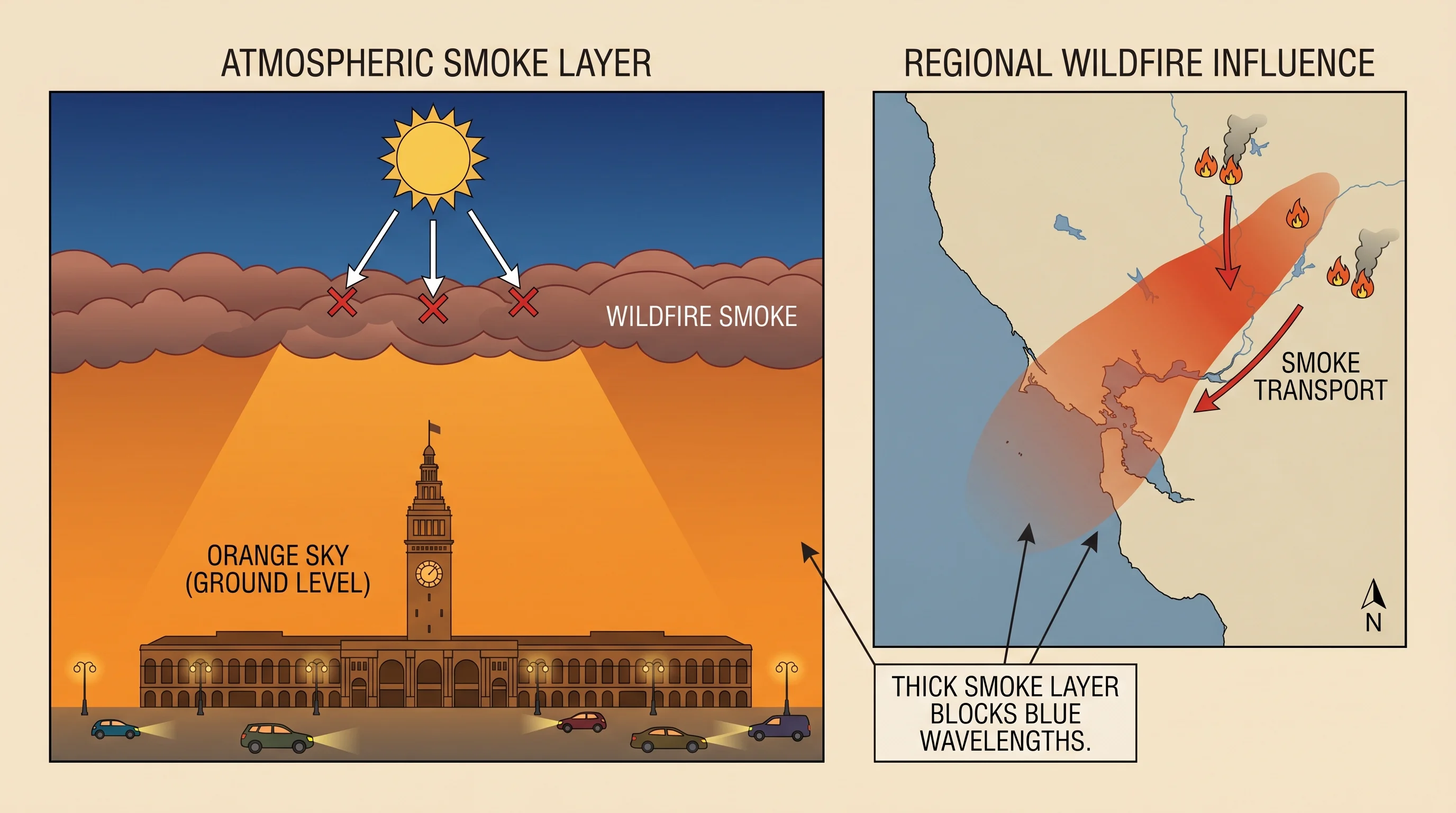
The heat dome created the conditions that made the Lightning Siege possible. As the high pressure built and the lower atmosphere became hot and unstable, a pulse of monsoonal moisture from the southwest moved into Northern California. Thunderstorms developed in the extremely hot, unstable air, producing dry lightning strikes, lightning from storms that produce little or no rainfall at the surface. On the night of August 15-16, more than 10,000 lightning strikes hit Northern California in a 72-hour period. An estimated 560 fires ignited simultaneously.
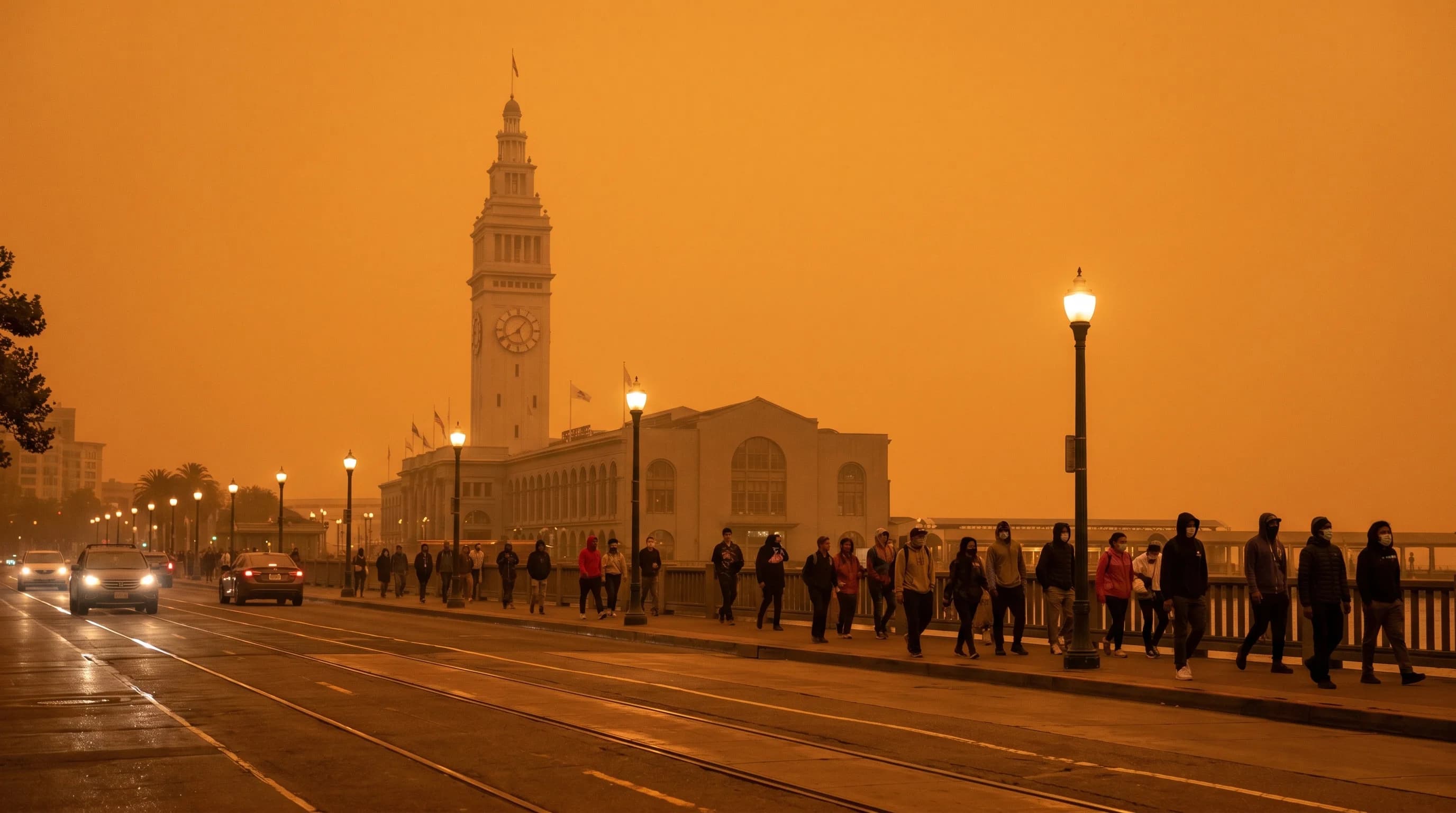
Three of the ignitions became massive complexes. The SCU Lightning Complex in the Diablo Range east of the Bay Area burned more than 396,000 acres. The LNU Lightning Complex in the North Bay wine country burned more than 363,000 acres, destroying neighborhoods in Vacaville and forcing evacuations across Napa and Sonoma counties. The CZU Lightning Complex in the Santa Cruz Mountains burned more than 86,000 acres and forced evacuation of more than 75,000 people. The sky over the Bay Area turned orange. Air quality reached hazardous levels that exceeded the scale of most measuring instruments. Schools closed, outdoor activities were canceled, and residents were advised to stay indoors.
Lessons and Legacy
The 2020 heat dome and Lightning Siege accelerated changes in how California manages fire risk, power grid reliability, and extreme heat preparedness. PG&E's power shutoffs in extreme weather conditions, already in place following the 2018 Camp Fire, were refined. The state invested in additional prescribed burn capacity and forest management. Cooling center protocols were updated. The California Department of Forestry and Fire Protection expanded its air attack and ground crew capacity.
The deeper lesson of August 2020 is about interaction effects. The heat dome alone would have been a serious but manageable event. The lightning siege alone would have been serious. The smoke alone would have been serious. The power grid strain alone would have been serious. Combined, they created a week where the region's multiple protective and response systems were overwhelmed simultaneously. Climate scientists use the 2020 event as a reference case for compound extreme events, situations where multiple climate-related stresses occur together, producing outcomes far worse than any single stressor would produce alone.