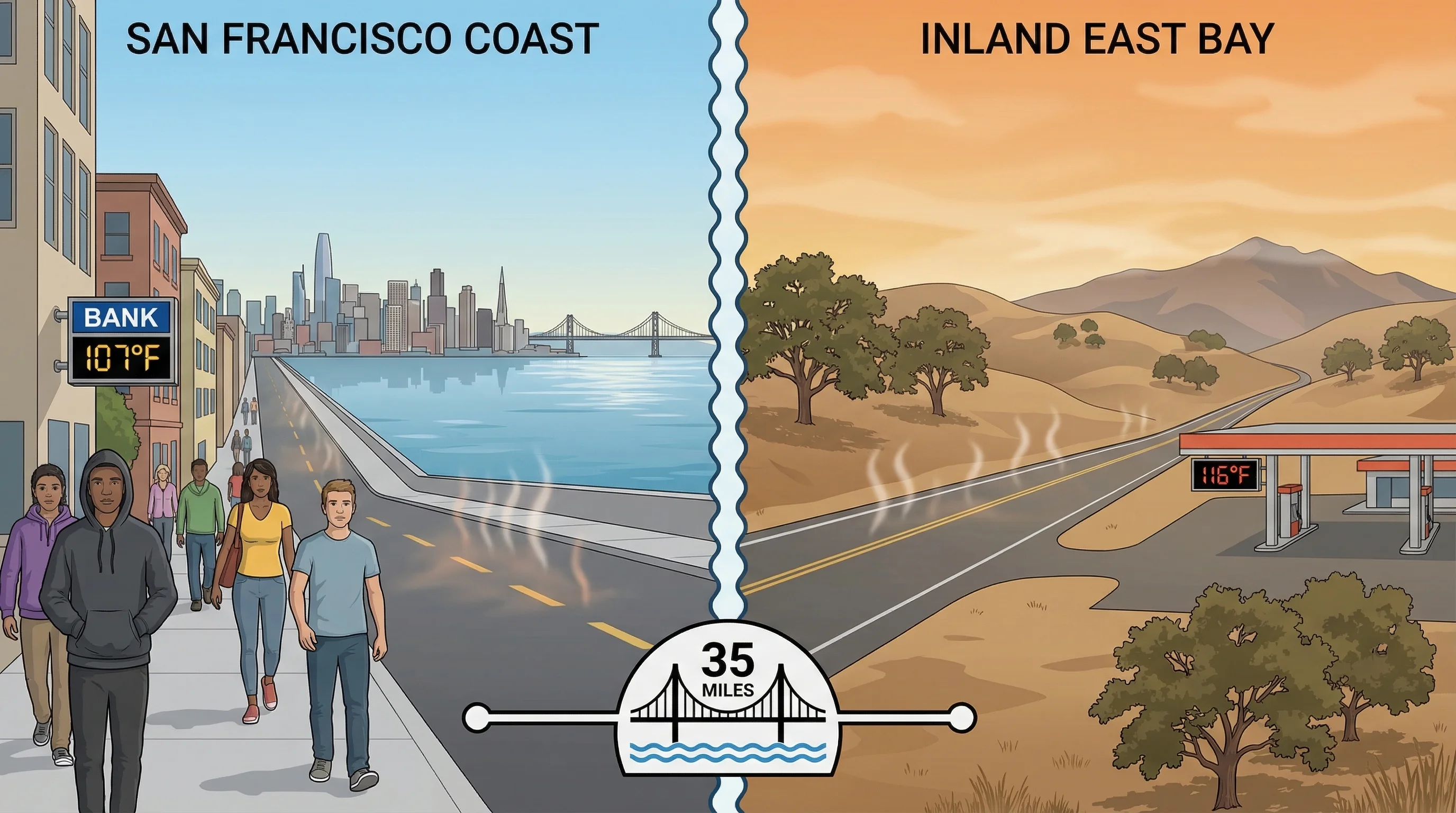
The Bay Area's hottest temperature records exist in two separate categories: the coastal cities that the marine layer normally protects, and the inland valleys where summer heat is the baseline. In both categories, the records have been broken in recent years, which tells a meaningful story about the region's changing climate. San Francisco's all-time record has been broken in the modern era, reaching 106 degrees Fahrenheit on September 1, 2017. In the inland East Bay, temperatures above 115 degrees have been recorded during major heat dome events. Those records are more than weather trivia: they are a preview of what the region will experience with increasing frequency.
San Francisco: Hottest Temperature on Record
San Francisco's official all-time high temperature is 106 degrees Fahrenheit, recorded on September 1, 2017. The National Weather Service reported that it broke the city's previous all-time record of 103 degrees. During the major September 2022 heat event, downtown San Francisco reached 98 degrees rather than setting a new all-time record.
Both the 2017 and 2022 events were heat dome episodes in which the North Pacific High amplified and extended a ridge of high pressure inland, suppressing the marine layer and allowing Diablo offshore winds to replace the normal cool westerly flow. Without the sea breeze and marine layer, San Francisco is a city on a peninsula with full southern and western sun exposure. In this configuration, it heats rapidly, and without the overnight marine recovery that normally resets temperatures, it begins each subsequent day at a higher baseline.
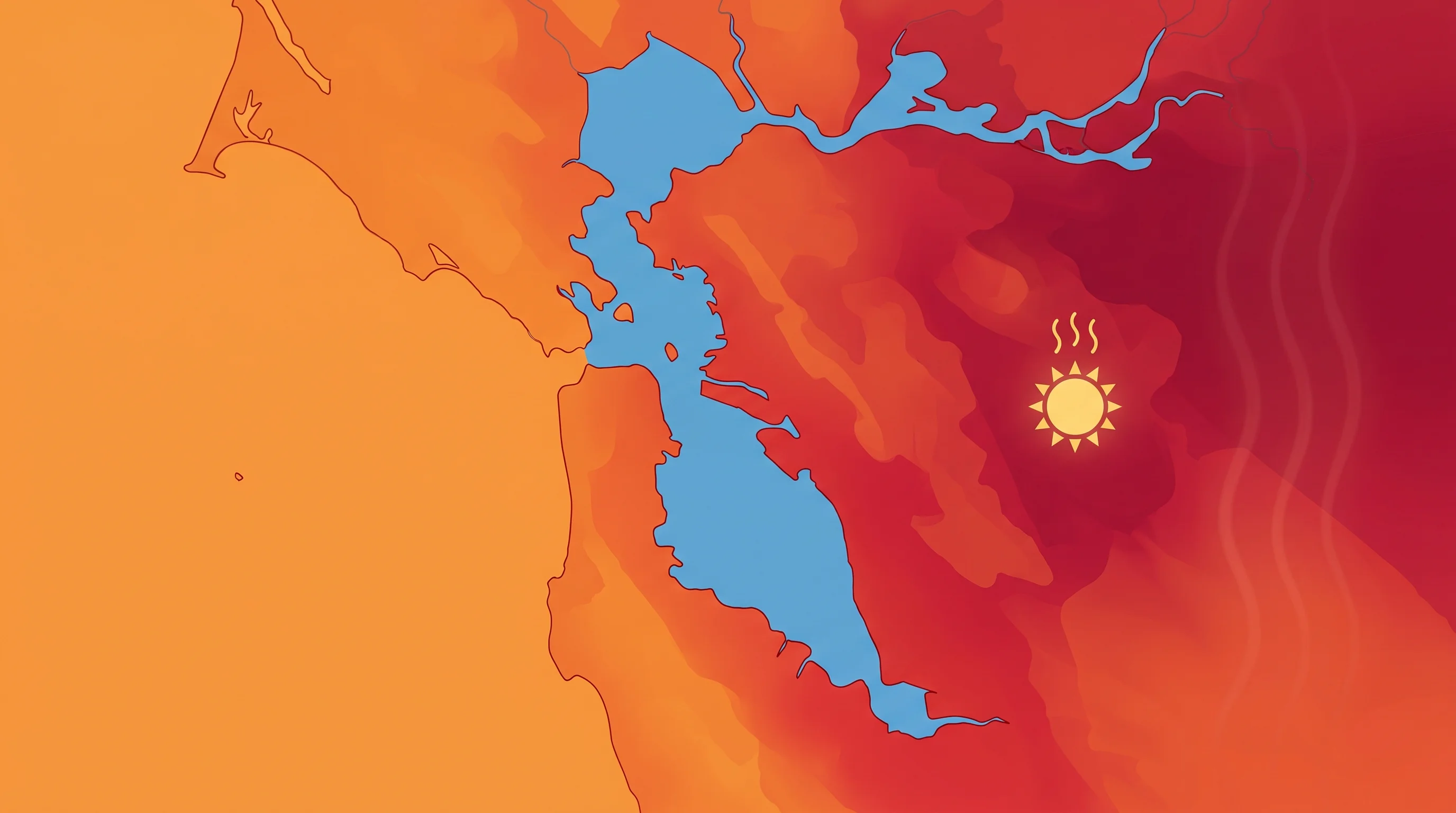
Inland Bay Area: The Real Heat Frontier
The inland East Bay and South Bay valleys record temperatures that dwarf the coastal records. Livermore reached 116 degrees Fahrenheit during the September 2022 heat event. Other inland stations also exceeded 110 degrees during major heat domes. These temperatures are not anomalous for inland California; they are comparable to what Sacramento, Fresno, and Bakersfield experience in severe heat waves. The difference is that the Bay Area's inland communities are a short drive from the ocean, which creates a surreal contrast: the same day that Concord is at 116 degrees, Half Moon Bay 30 miles west is at 62 degrees.
The geographic pattern of Bay Area heat records makes meteorological sense. The marine layer's cooling effect diminishes with distance from the coast and with elevation barriers between a given location and the ocean. Locations that are topographically shielded from the sea breeze, deep in valleys, behind hills, far from any direct oceanic exposure, record the highest temperatures because they receive none of the marine protection on the worst days. The 50-plus degree difference between coastal and inland temperatures during a major heat event is one of the largest temperature gradients over short distances of any metropolitan area in the world.
Heat Records and Climate Trajectory
Extreme heat risk is increasing as the climate warms, but individual station records need careful attribution. San Francisco's official all-time record remains the 106-degree observation from 2017; the 2022 event instead set striking records at several inland stations. A higher background temperature makes future heat waves more dangerous even when the atmospheric pattern resembles earlier events.