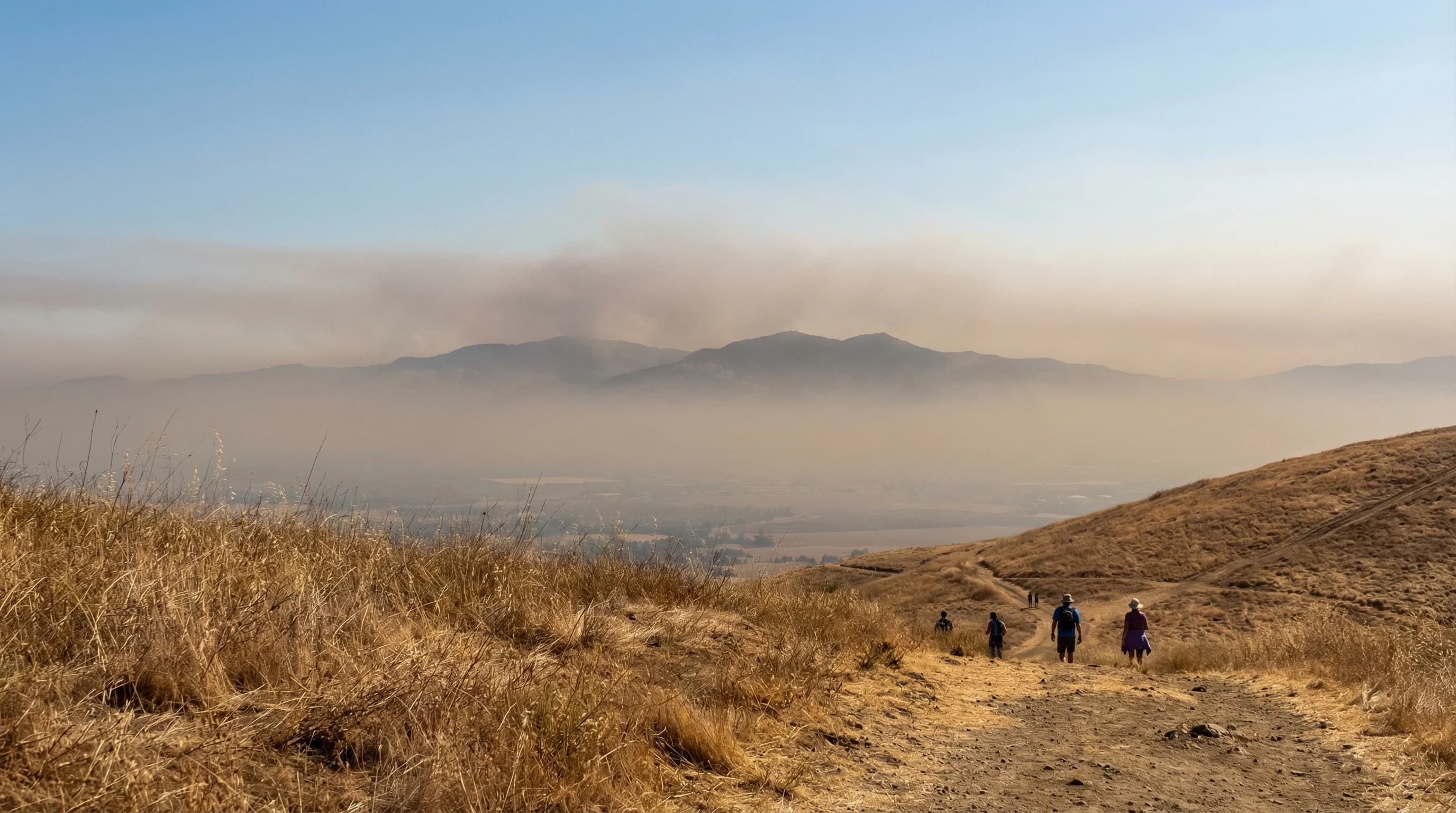
Ozone is the Bay Area's most persistent air quality problem, and it operates by rules that seem counterintuitive until you understand its chemistry. Ozone at ground level is not emitted directly by cars or factories; it is created when sunlight reacts with nitrogen oxides and volatile organic compounds in the presence of heat. This means ozone is not necessarily worst where the most cars are, or where the most emissions are. It is worst where the photochemical cooking conditions are right: strong sunlight, hot temperatures, and stagnant air. In the Bay Area, those conditions reliably converge in the inland East Bay and South Bay valleys on hot summer afternoons, not in San Francisco, where the sea breeze and marine layer suppress both the heat and the atmospheric stagnation required to form ozone.
How Ozone Forms
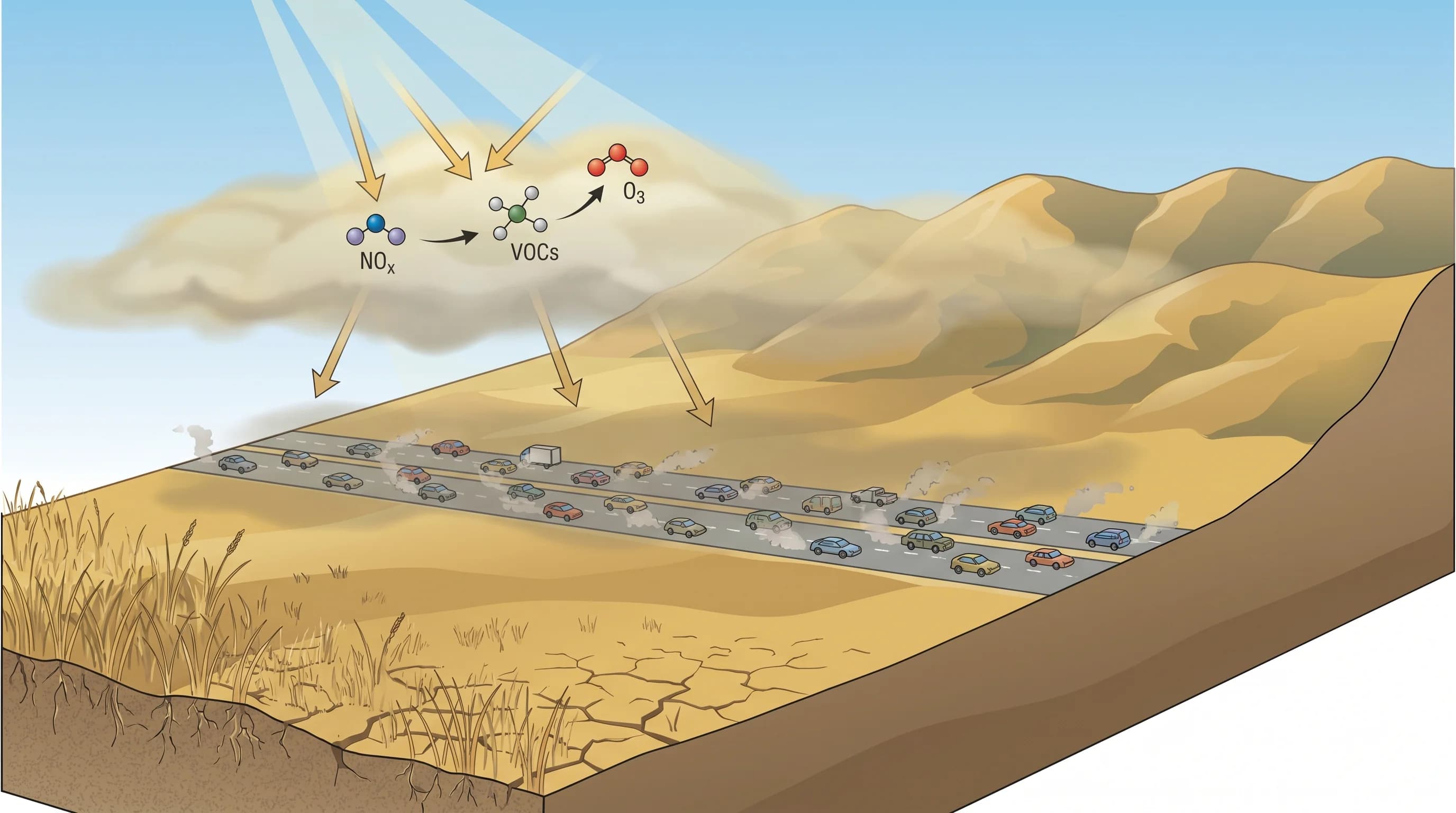
Ground-level ozone, or tropospheric ozone, forms through a photochemical reaction that requires three ingredients: nitrogen oxides (primarily from vehicle exhaust and industrial combustion), volatile organic compounds (from vehicles, petroleum products, and some natural vegetation), and ultraviolet sunlight. When sunlight hits nitrogen dioxide, it splits off an oxygen atom that combines with atmospheric oxygen (O2) to form ozone (O3). Nitrogen oxides and VOCs act as catalysts that sustain and amplify this process.
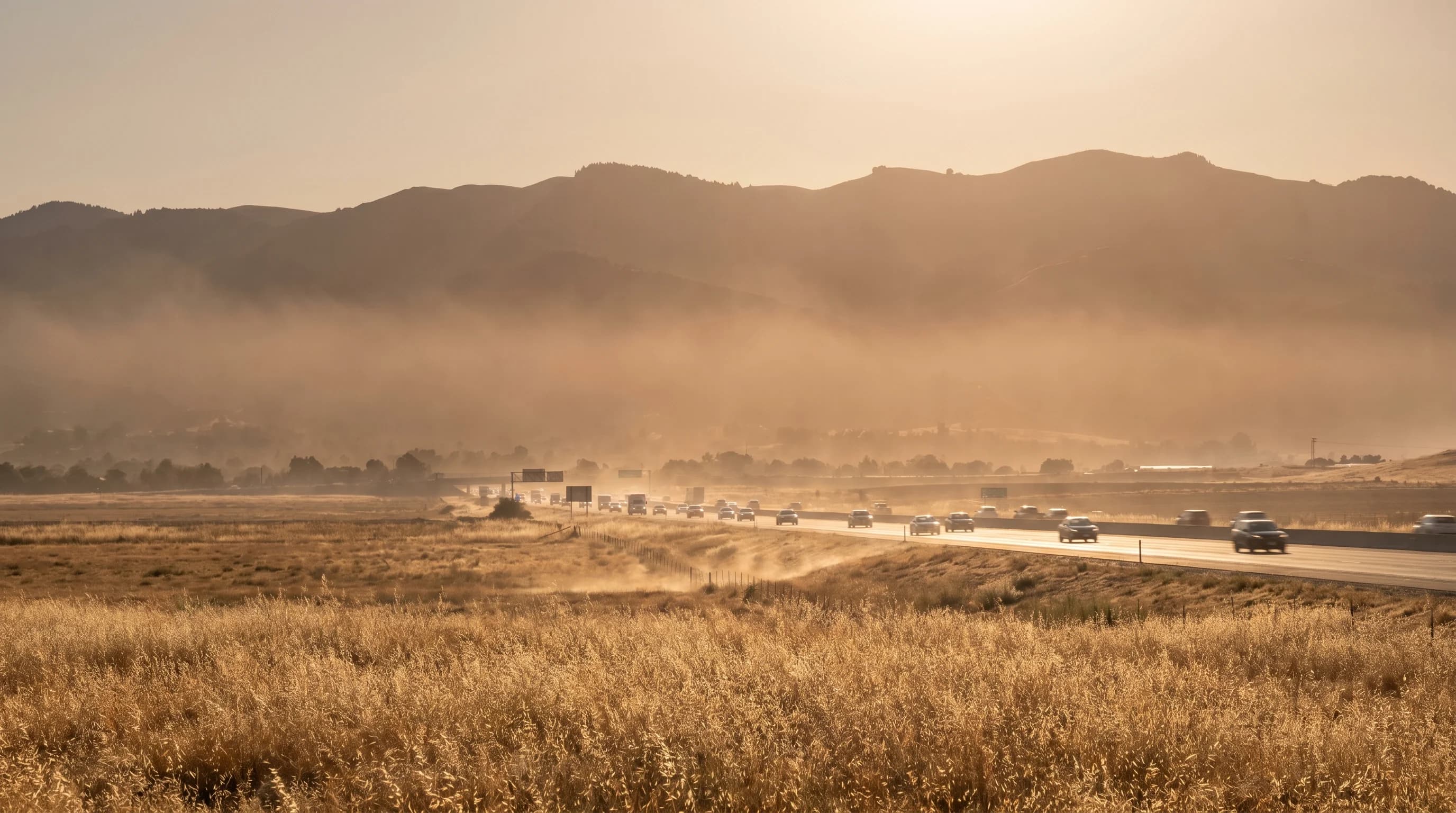
Because ozone formation requires sunlight and heat, ozone levels peak in the afternoon, typically between 1 and 5 p.m. Because it takes time for the photochemical process to convert precursor emissions into ozone, the highest ozone levels are often found downwind of the emission sources, not at them. In the Bay Area, vehicle emissions from freeways in the morning commute contribute to afternoon ozone peaks in the inland East Bay and the Central Valley, carried by the sea breeze.
Where Ozone Is Worst in the Bay Area
The Bay Area's highest ozone concentrations consistently occur in the inland valleys on hot summer afternoons. Livermore and the Livermore Valley are historically the Bay Area's highest-ozone monitoring locations, regularly exceeding the federal 8-hour ozone standard on summer days when temperatures are high and winds are light. The Livermore Valley sits at the end of the Altamont Pass corridor, where the sea breeze carries ozone precursors inland from the Bay Area metro before they have had time to chemically convert, and where the hot, sunny afternoon conditions accelerate ozone formation.
Contra Costa County communities including Concord, Pittsburg, and Antioch also experience elevated ozone, particularly when the sea breeze is light or when temperatures are extreme enough to suppress the afternoon mixing that normally dilutes ozone. The South Bay, particularly the southern Santa Clara Valley around Gilroy and Morgan Hill, can also experience elevated ozone on hot, stagnant days.
Ozone and Health
Ground-level ozone is a respiratory irritant. Even short-term exposure at levels above the federal standard can cause chest tightness, coughing, throat irritation, and reduced lung function. People with asthma experience more frequent attacks. Athletes and outdoor workers exposed during afternoon ozone peaks can experience measurable lung function reduction even if they feel no immediate symptoms. Long-term exposure at high ozone levels is associated with chronic respiratory disease and premature death from respiratory and cardiovascular causes.
The Bay Area Air Quality Management District issues ozone advisories when forecast conditions suggest ozone will exceed federal standards. These advisories focus on the inland valleys where ozone is highest. The practical advice during high-ozone days is to schedule outdoor exercise before 10 a.m. or after 6 p.m., when ozone levels are lower, and to stay informed through real-time AQI monitoring at the nearest monitoring station. Coastal residents are rarely affected by ozone at problematic levels; the sea breeze and marine layer keep coastal ozone low even on days when the inland valleys are in the Unhealthy range.