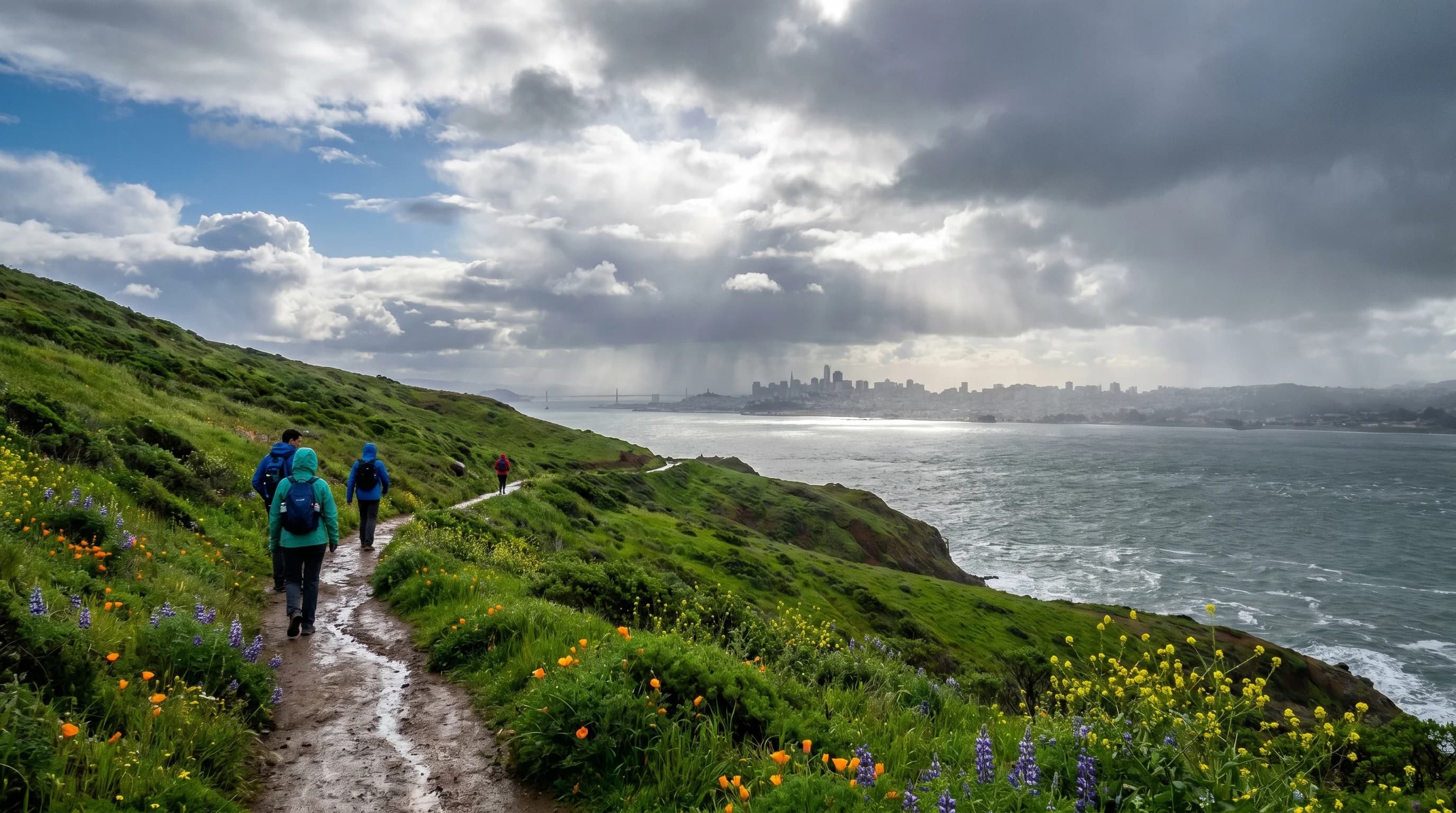
March is San Francisco's shoulder season, the transitional month between the wet winter and the dry summer. It is the last month with reliable rainfall, averaging about 3.1 inches, but it is also the month when the Bay Area starts turning a corner toward warmer, clearer conditions. Average highs reach 61 degrees F, five degrees warmer than January, and the days are noticeably longer, with sunset pushing past 7:15 PM by month's end. March is when San Francisco stops feeling like winter and starts hinting at the spring and summer ahead.
How Much Rain Does March Get?
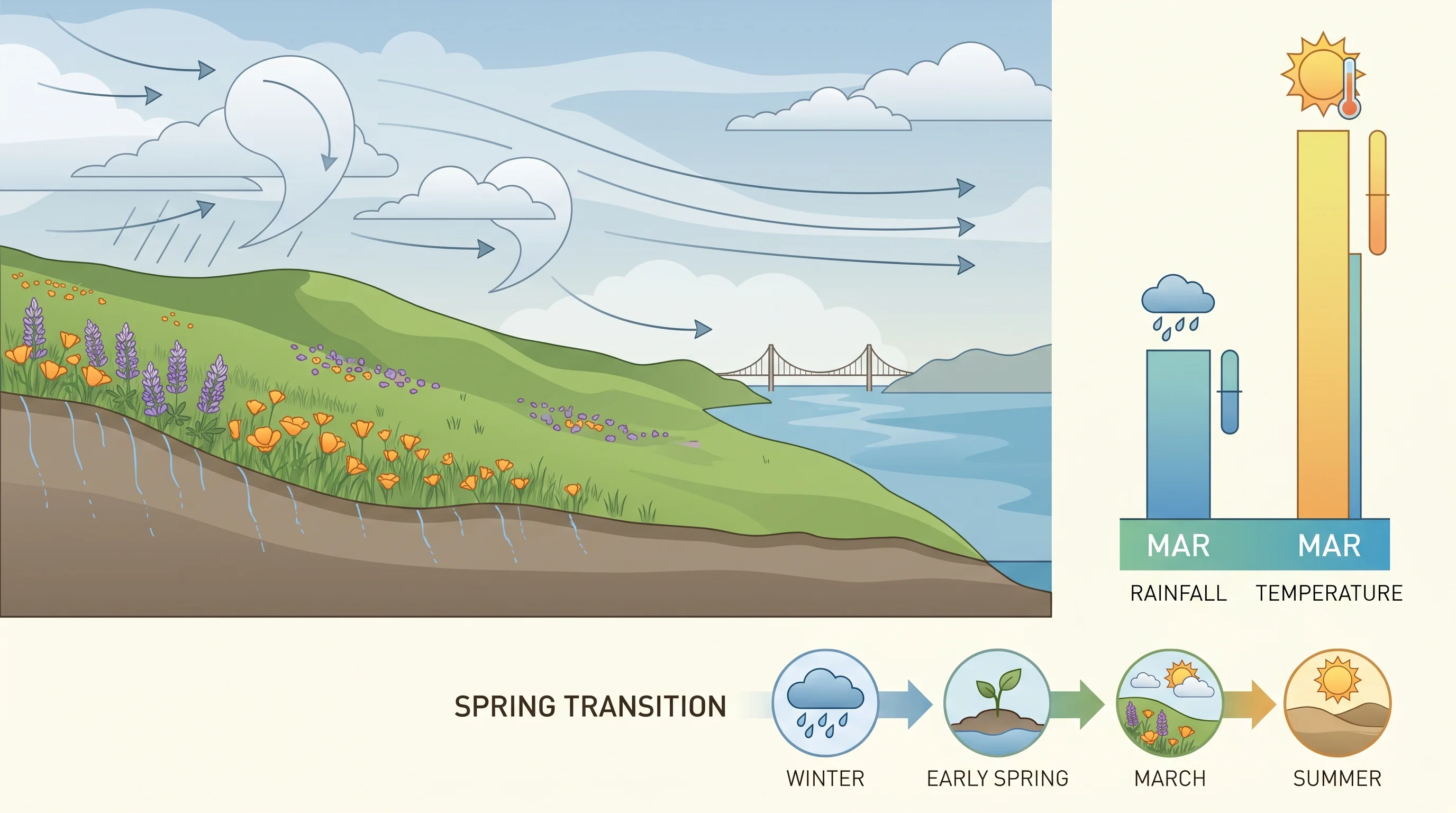
March averages 3.1 inches of rain across about 10 rainy days, making it the fourth-wettest month behind January (4.4 inches), December (3.8 inches), and February (4.0 inches). But March rain is different from midwinter rain in character. The atmospheric rivers that dominate January and February begin tapering off, and March storms tend to be shorter and less intense. A March storm might deliver 0.5 inches over a morning instead of 2 inches over two days.
The rain is not evenly distributed through the month. Some Marches are wet start to finish, while others see nearly all their rainfall in the first two weeks followed by a dry, warm stretch. March 2023 was a notable outlier, with atmospheric river storms continuing well into the month after an exceptionally wet winter. By contrast, some drought years see March rainfall at less than an inch. The variability is high, which makes March a month where checking the forecast before a trip is more important than relying on averages.
What Are March Temperatures Like?
March highs average 61 degrees F and lows average 49 degrees F. The temperature range is modest: San Francisco does not get cold nights in March by national standards, and daytime temperatures are comfortable for walking, hiking, and outdoor dining with a light jacket. The warmest March days can hit the upper 60s or even touch 70 degrees during brief warm spells, usually when high pressure builds over the coast and pushes the marine influence offshore.
The difference between March and the coming summer months is not just temperature but sun angle. March sun is noticeably warmer than January sun even when the thermometer reads the same number. Daylight savings time begins in early March (since 2007), adding an hour of evening light that makes the month feel significantly warmer than the data suggests. March is the month when San Franciscans start eating dinner outside again.
Wildflowers and Green Hills
March is the peak month for green hills and wildflowers in the Bay Area. The winter rains have saturated the ground, temperatures are warm enough for rapid plant growth, and the hills that spent summer and fall in golden brown are now vivid green. California poppies bloom across Lands End, Mount Tamalpais, and the Marin Headlands. Lupine, buttercups, and mustard add splashes of purple and yellow across every grassy slope.
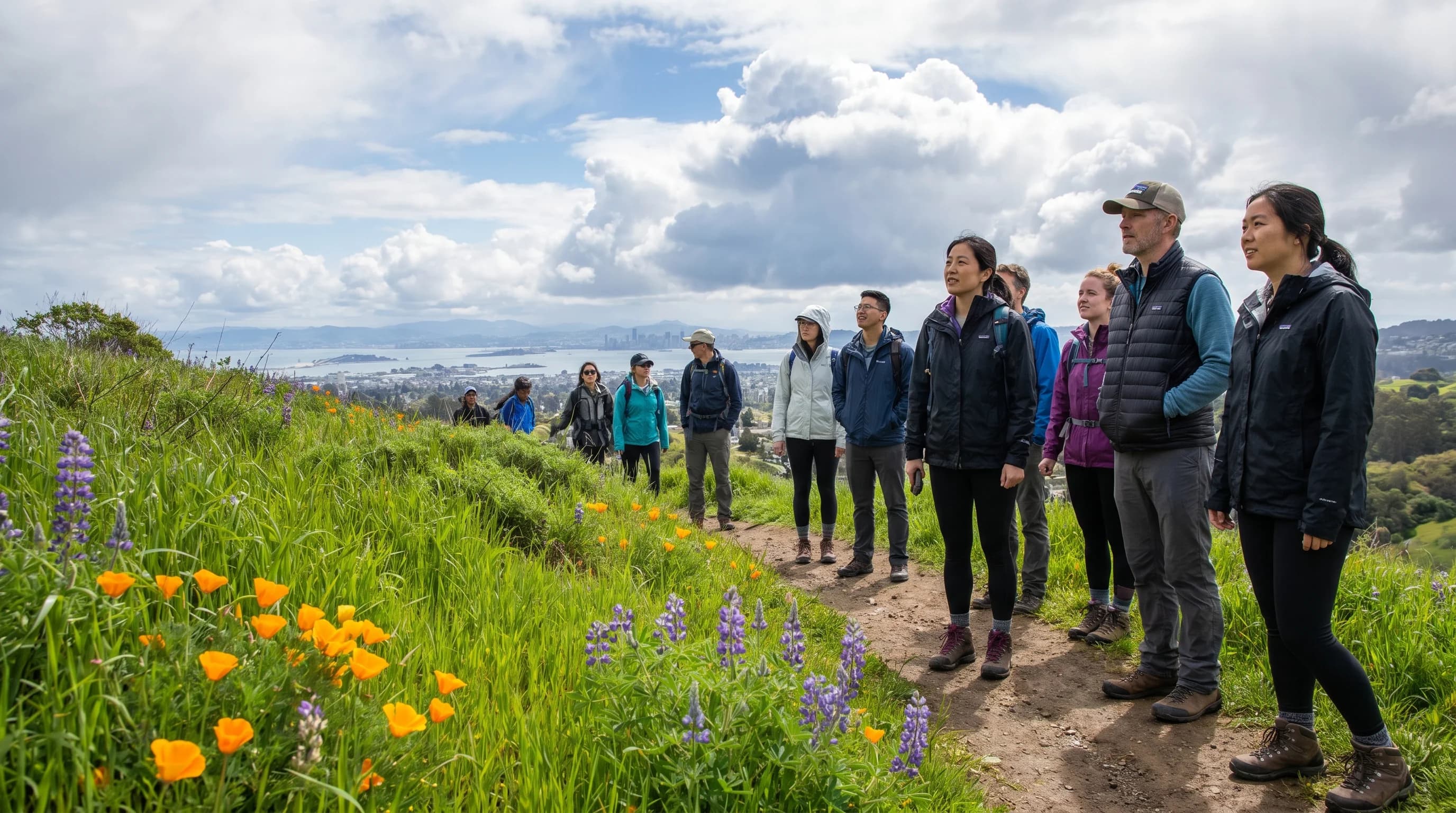
This is one of the best months for hiking in the Bay Area. The air is clear after winter rains, visibility is excellent, trails are green and in good condition, and temperatures are cool enough for comfortable exertion. The summer fog has not yet started, so coastal trails that will be gray and cold in June are often sunny and pleasant in March.
Fog and Wind in March
March fog is minimal. The summer fog machine has not activated yet because the Central Valley has not begun its seasonal heating. Marine layer fog can still form along the coast on some mornings, but it is typically thin and burns off quickly. Wind is moderate: the strong summer afternoon winds that blast through the Golden Gate at 25-30 mph are a few months away. March winds are gentler, averaging 10-15 mph in the afternoon, enough to justify a wind layer but not enough to make outdoor activities unpleasant.
March in San Francisco occupies a sweet spot: the wet season is winding down, the fog season has not started, and the landscape is at its most beautiful. It is not the warmest month, and you will likely get rained on at least once, but the combination of green hills, wildflowers, manageable temperatures, and clear air makes March one of the most underrated months to experience the city. Bring a rain jacket and a camera, and plan for the possibility of both sunshine and showers in the same afternoon.