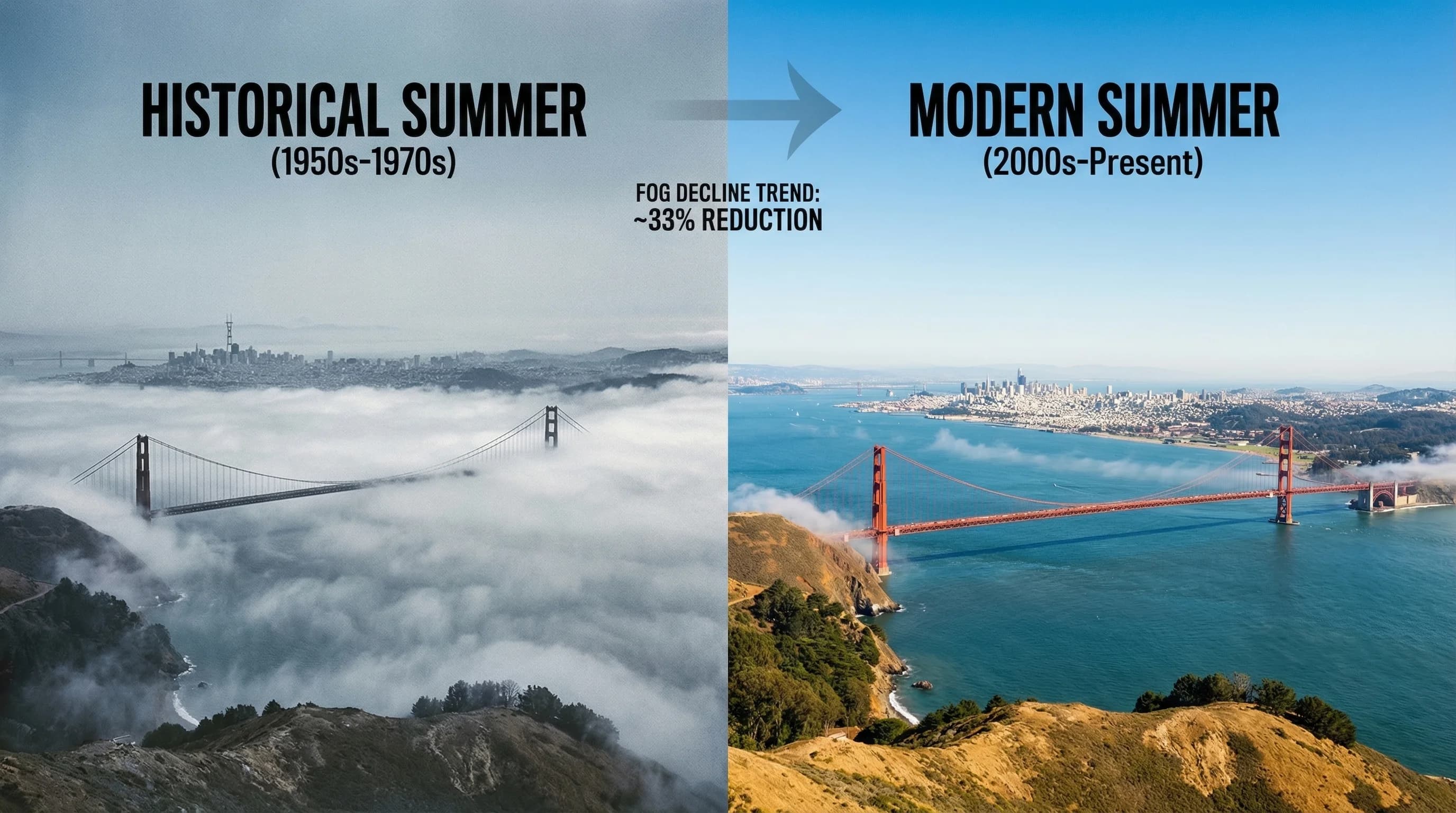
If you have lived in the Bay Area for decades, you may have noticed something: the summers feel less foggy than they used to. That observation is not just nostalgia or faulty memory. Research published over the past two decades has documented a measurable decline in Bay Area fog frequency since the mid-20th century, with some studies finding reductions of 30 to 50 percent in coastal fog hours since the 1950s. The mechanisms behind this trend are debated, and the relationship with climate change is more complicated than a simple warming-reduces-fog story. Understanding what is actually happening requires looking at three interacting systems: Pacific sea surface temperatures, inland temperature patterns, and the strength of the pressure gradients that drive marine air inland.
What Research Shows About Fog Decline
The most widely cited study on Bay Area fog decline was published in 2010 by researchers at UC Berkeley, who analyzed decades of weather station data along the California coast. They found that summer fog frequency at coastal stations dropped by roughly 33 percent between the 1950s and 2000s. Stations in San Francisco, Point Reyes, and Half Moon Bay all showed similar downward trends in fog hours per summer.
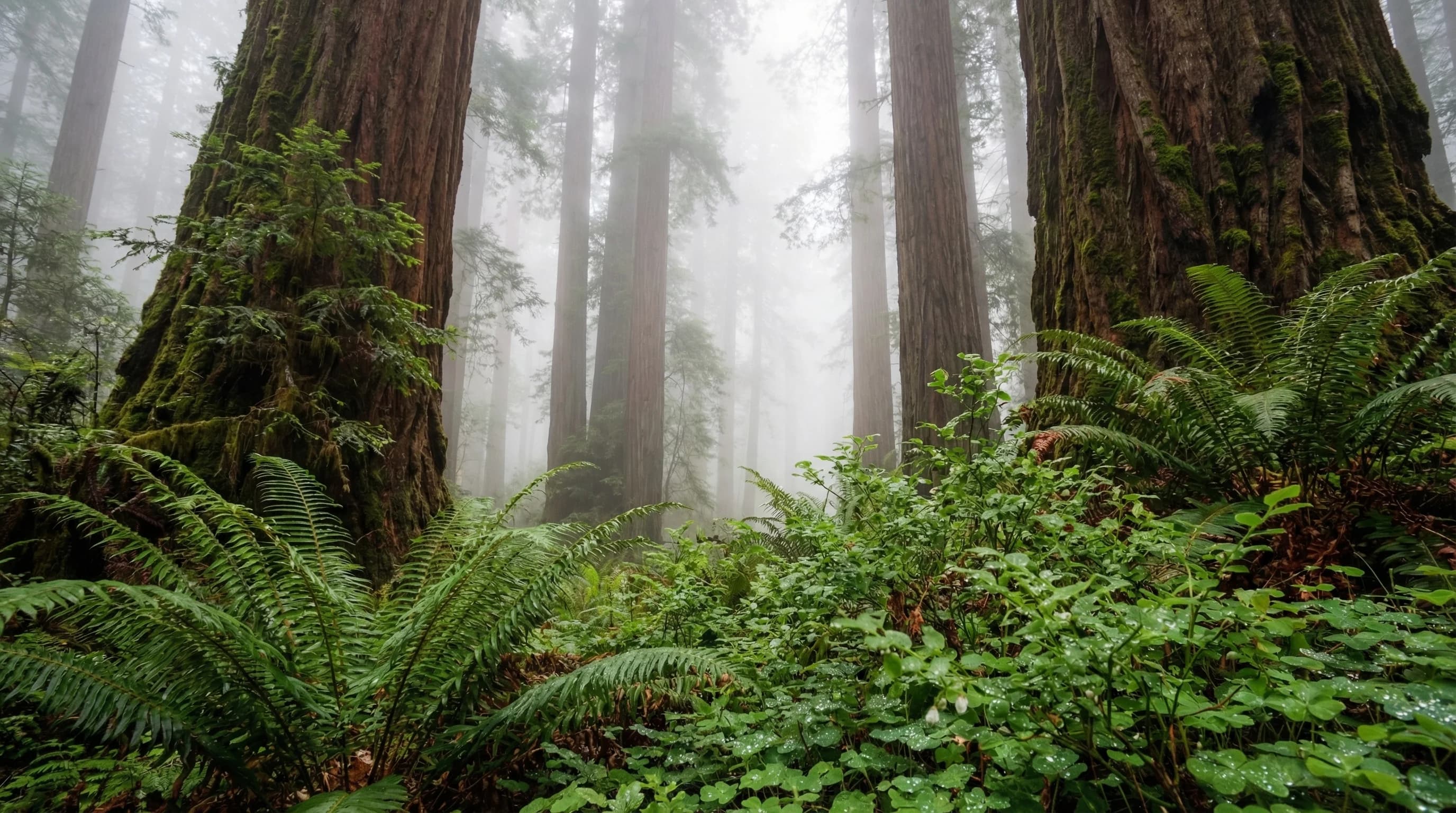
A separate analysis of redwood forests by the same research team found that fog drip, the moisture that coastal redwoods collect directly from fog rather than rain, declined by a similar amount over the same period. Because redwoods in the coast range depend on fog drip for a significant portion of their summer moisture, the ecological implications of fog decline are substantial and provide an independent proxy for the historical fog trend.
More recent analyses have complicated the simple decline narrative somewhat. Fog records from some stations show partial recovery in certain years, and satellite-based fog detection methods have produced inconsistent trends depending on which parameters are measured. The general scientific consensus is that fog has declined, but the rate and recent trajectory remain active areas of research.
Why Is Fog Declining? The Competing Explanations
Here is where the science gets interesting. Naive climate reasoning would suggest that warmer temperatures reduce fog by reducing the contrast between ocean and air temperature. But that is not what the data actually shows. Warming has been faster inland than on the coast, which should strengthen the pressure gradient that drives marine air inland and potentially increase fog, not reduce it.
The most likely explanation is that Pacific sea surface temperatures have warmed enough to reduce the cold water conditions that generate the marine layer. Bay Area fog depends on cold ocean upwelling keeping coastal sea surface temperatures in the 50 to 54-degree range. If global ocean warming has raised the floor on how cold the California Current and its upwelled water can get, the moisture contrast that generates the marine layer is reduced even if coastal upwelling continues.
There is also evidence that the North Pacific High, the atmospheric system that drives the northwest winds responsible for coastal upwelling, has shifted or weakened in ways that reduce upwelling intensity. Weaker upwelling means warmer coastal water, which means a weaker marine layer. Some researchers also point to changes in atmospheric circulation patterns over the North Pacific as contributing factors to both warmer ocean temperatures and changes in fog-driving wind patterns.
What Fog Decline Means for the Bay Area Ecosystem
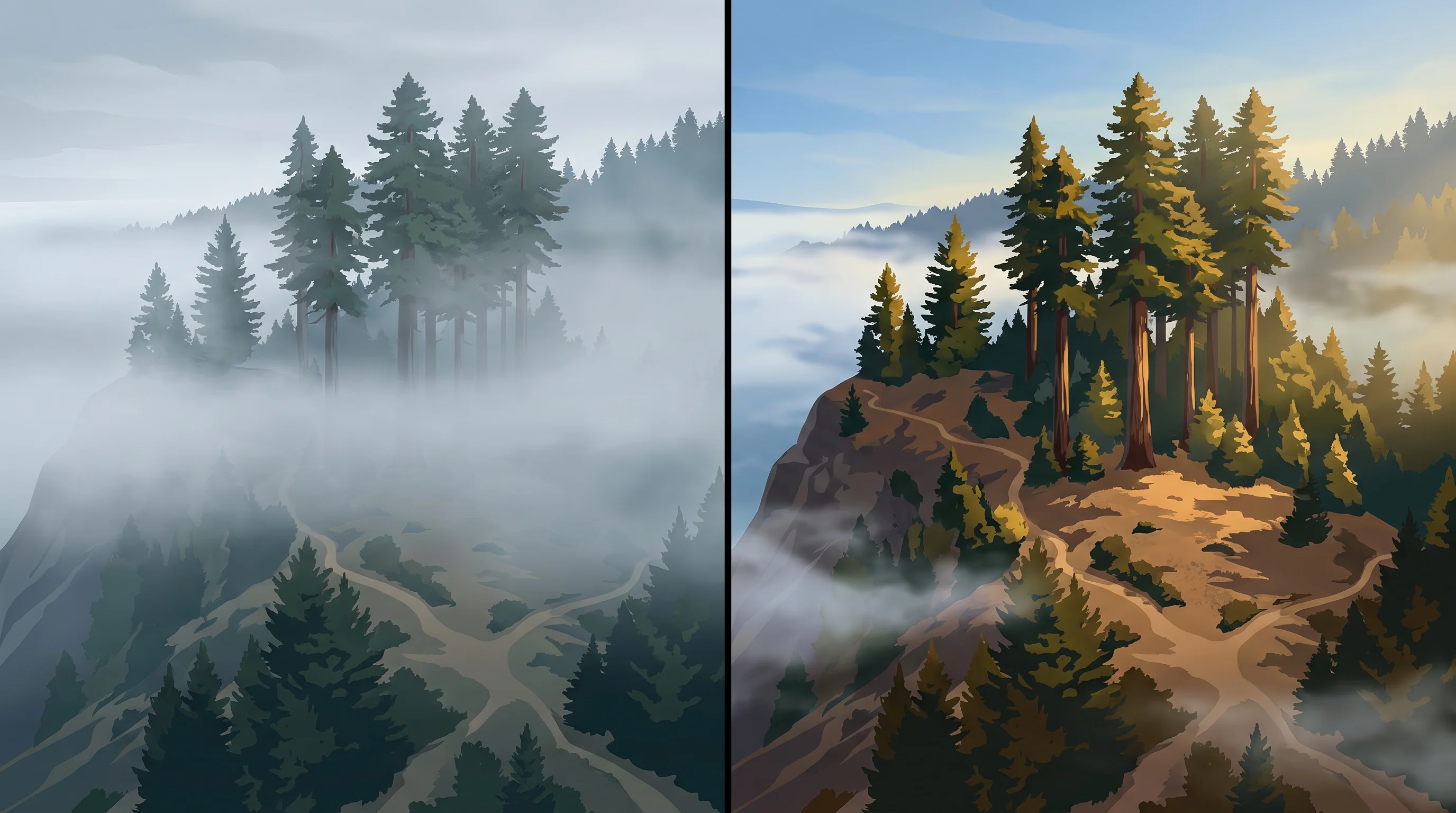
The ecological consequences of declining summer fog are significant. Coast redwoods are the most iconic affected species: they evolved over millions of years in a climate where summer fog drip provided moisture during the dry season. A 33 percent reduction in fog hours represents a 33 percent reduction in that moisture source during the period when rain does not fall. Redwood forests have shown signs of drought stress in recent decades that researchers link partly to reduced fog.
Fog also moderates temperature in coastal ecosystems. Without the fog blanket that keeps coastal areas cool and humid on summer days, temperatures in coastal scrub, grassland, and forest ecosystems rise. This affects the timing of plant flowering, the range limits of fog-adapted species, and the fire weather conditions in coastal areas. The remarkable consistency of San Francisco's summer climate, which has made the city livable without air conditioning, depends in part on persistent summer fog keeping temperatures in a narrow band.
Marin County's coastal grasslands, the breeding habitat for numerous shorebird and seabird species on Point Reyes National Seashore, are shaped by fog. The unique plant communities of the coastal headlands depend on fog for moisture. Any significant long-term reduction in fog would alter these ecosystems in ways that are difficult to predict or reverse.
Will Bay Area Fog Continue to Decline?
Climate projections for Bay Area fog are genuinely uncertain, and different research groups have reached different conclusions. Some models project continued fog decline as Pacific ocean temperatures rise. Others project potential increases in coastal upwelling driven by strengthened temperature gradients between California's hot interior and the cooling Pacific, which would maintain or even increase fog despite overall warming.
The uncertainty stems from the competing forces involved. Global ocean warming reduces the cold water that drives fog. But stronger inland heating increases the pressure gradient that pulls marine air inland. Regional atmospheric circulation changes affect the North Pacific High in ways that models do not agree on. The net result of these competing forces on future Bay Area fog is genuinely unknown.
What is clear is that the simple assumption that a warmer world means a less foggy Bay Area is not necessarily correct. The relationship between global warming and Bay Area fog is mediated by oceanographic and atmospheric processes that introduce enough complexity to make confident projections difficult. The scientists working on this problem are clear about that uncertainty, and honest residents of the Bay Area should be too.
What You Actually Notice Day to Day
For people living in the Bay Area, fog trends play out in year-to-year variability rather than smooth long-term change. El Niño years have historically been less foggy because they bring warmer Pacific water that weakens the marine layer. La Niña years with cold Pacific water tend to be foggier. These interannual swings can be 20 to 30 percent above or below the long-term average, which is larger than the trend signal in most individual years.
The practical result is that it is difficult to tell from personal experience whether a given summer is less foggy because of long-term climate change or because of a near-term Pacific temperature anomaly. Both matter. But the long-term signal in the data, a slow drift toward fewer fog hours since the mid-20th century, is real and measurable at the regional scale even if it is hard to perceive year-to-year.
If you want to experience the Bay Area's summer fog at its most characteristic, the best strategy is to visit in June or July, when the North Pacific High is typically strongest and fog is most persistent. September and October, when fog has historically been lighter, offer the best chance of warm, clear coastal days. How those patterns shift over coming decades will say a lot about the future of the Bay Area's genuinely unusual climate.