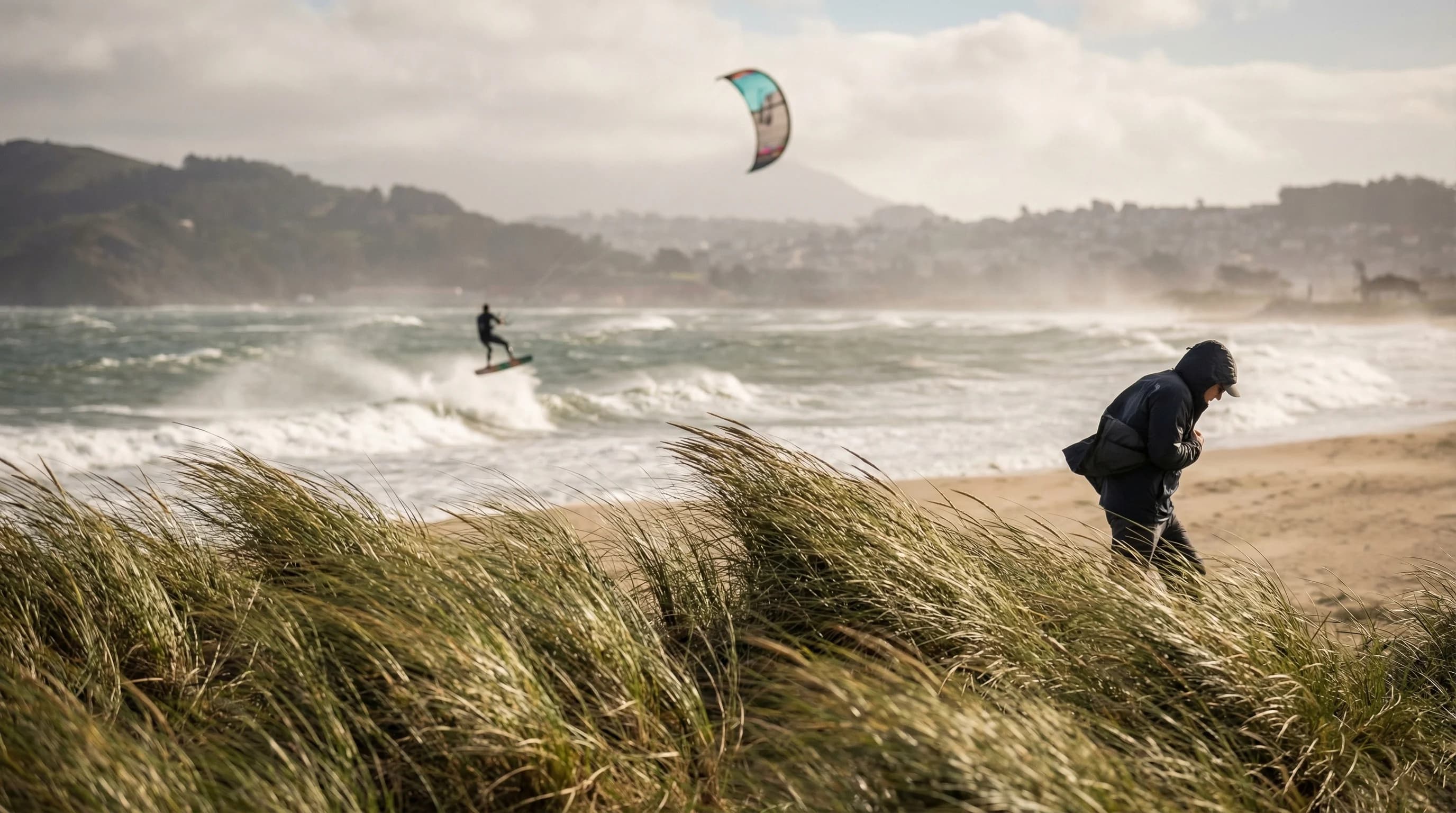
Stand at the west end of the Golden Gate Bridge on a summer afternoon and the wind will remind you immediately that you are in one of the windiest urban regions in the United States. This is not random weather. The Bay Area's wind is the direct product of geography, ocean temperature, and the physics of pressure gradients, and it follows predictable patterns that anyone who spends time here learns to read. The wind also explains a lot about the region's famous microclimates. The seasonal ramp-up starts when the North Pacific High strengthens in spring.
Is the Bay Area Actually Windier Than Other Regions?
The answer is yes, at least in specific areas and seasons. Coastal ridges, bay shores, and certain inland passages consistently record above-average wind speeds compared to similar latitudes elsewhere. Altamont Pass, the low gap in the hills between the Central Valley and the Bay, is one of the windiest locations in California. The wind there is so consistent and strong that it hosts one of the state's largest concentrations of wind turbines, some of the oldest in the country.
In San Francisco proper, downtown typically sees average winds of 8 to 10 mph, but exposed headlands and the waterfront regularly see 15 to 20 mph sustained. The Golden Gate itself, as a narrow opening between two bodies of water with different temperature profiles, sees near-constant wind year-round. Anyone who has sailed the bay knows this from experience.
How the Pressure Gradient Between Ocean and Inland Drives Wind
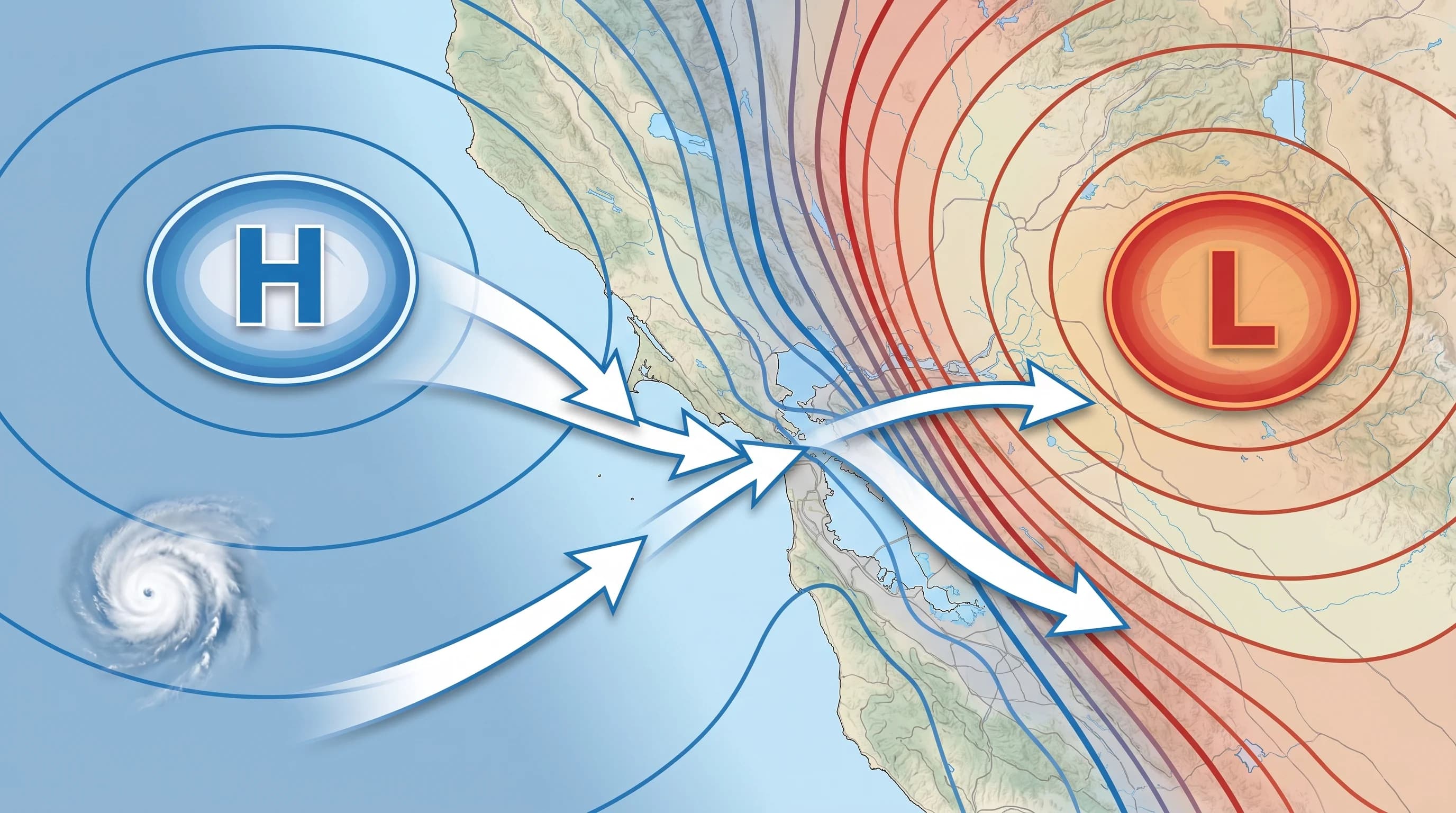
The fundamental driver of Bay Area wind is the temperature difference between the cold Pacific Ocean and the hot Central Valley. The ocean ranges from about 50 to 60°F through the year. In summer, the Central Valley reaches 95 to 105°F. This massive temperature contrast creates a pressure gradient: hot air over the valley rises and creates low pressure, while the cold ocean air is denser and sits under higher pressure. Air flows from high pressure to low pressure, which means from the ocean toward the inland. That flow is Bay Area wind.
The gradient is strongest in summer when the inland temperatures are at their peak, which is why summer afternoons are the windiest time for most Bay Area locations. By contrast, winter brings more rain and storms but actually less of the persistent daily onshore wind, because the temperature contrast between ocean and inland is much smaller when the Central Valley is cool and wet.
The Sea Breeze Cycle: Why Afternoons Are the Windiest
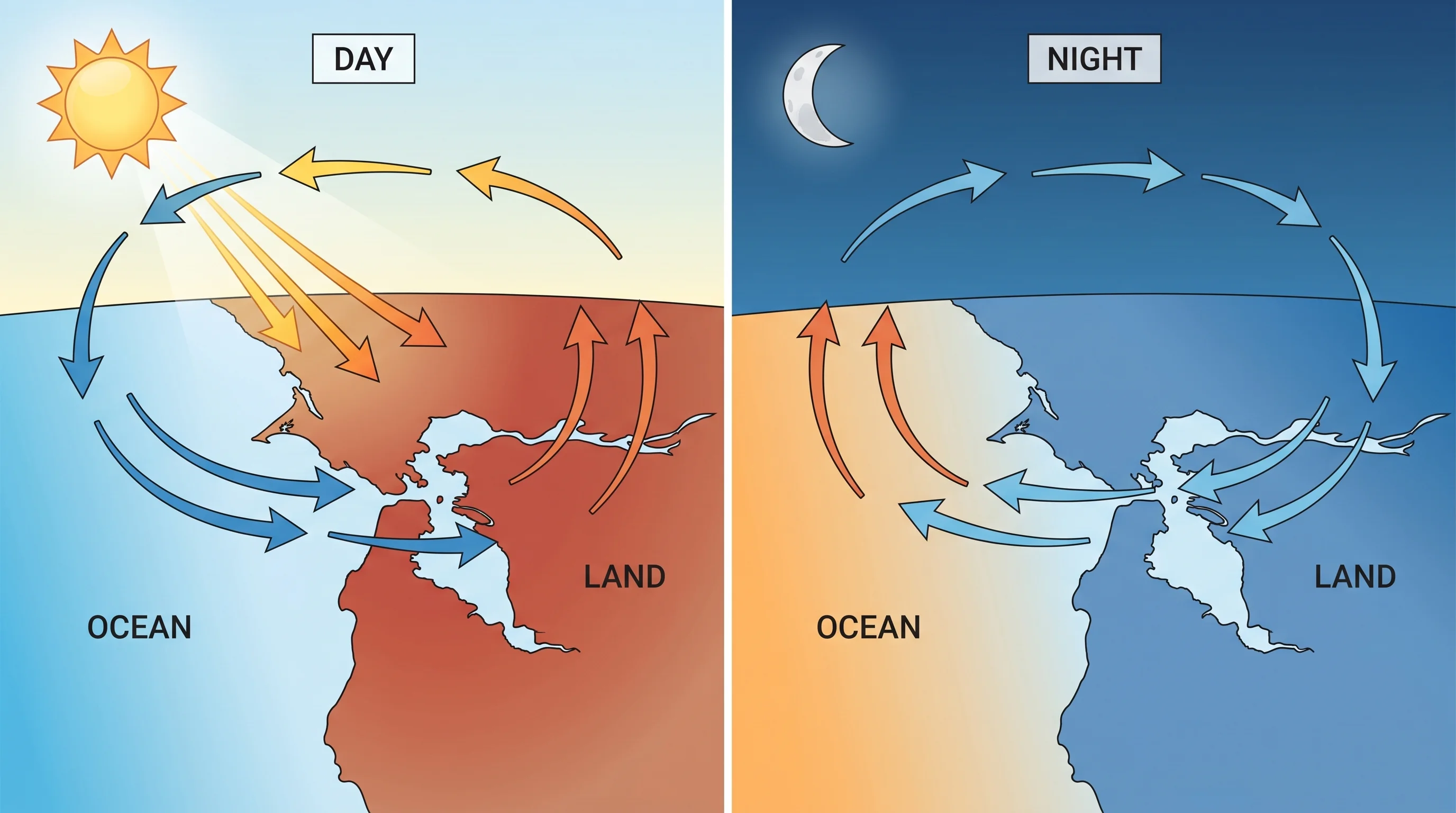
The daily wind pattern in the Bay Area is a textbook example of the sea breeze cycle. During the morning, temperatures are relatively similar between coast and inland and winds are light. As the inland areas heat up through the late morning and afternoon, the pressure gradient steepens. By early afternoon, cool ocean air is actively flowing toward the heat, and that is when the afternoon sea breeze arrives in full force. At Crissy Field, at the Berkeley Marina, at any exposed bay shore, the afternoon wind picks up reliably around 1 to 2pm and holds strong through early evening.
At night, the pattern reverses. Land cools faster than the ocean, so the temperature gradient weakens and eventually flips. Light offshore winds, called land breezes, develop after dark as the now-cooler land loses the advantage. These are much weaker than the afternoon sea breeze but are noticeable on calm clear nights near the water.
Wind Corridors: The Golden Gate, Altamont Pass, and Why They're Always Windy
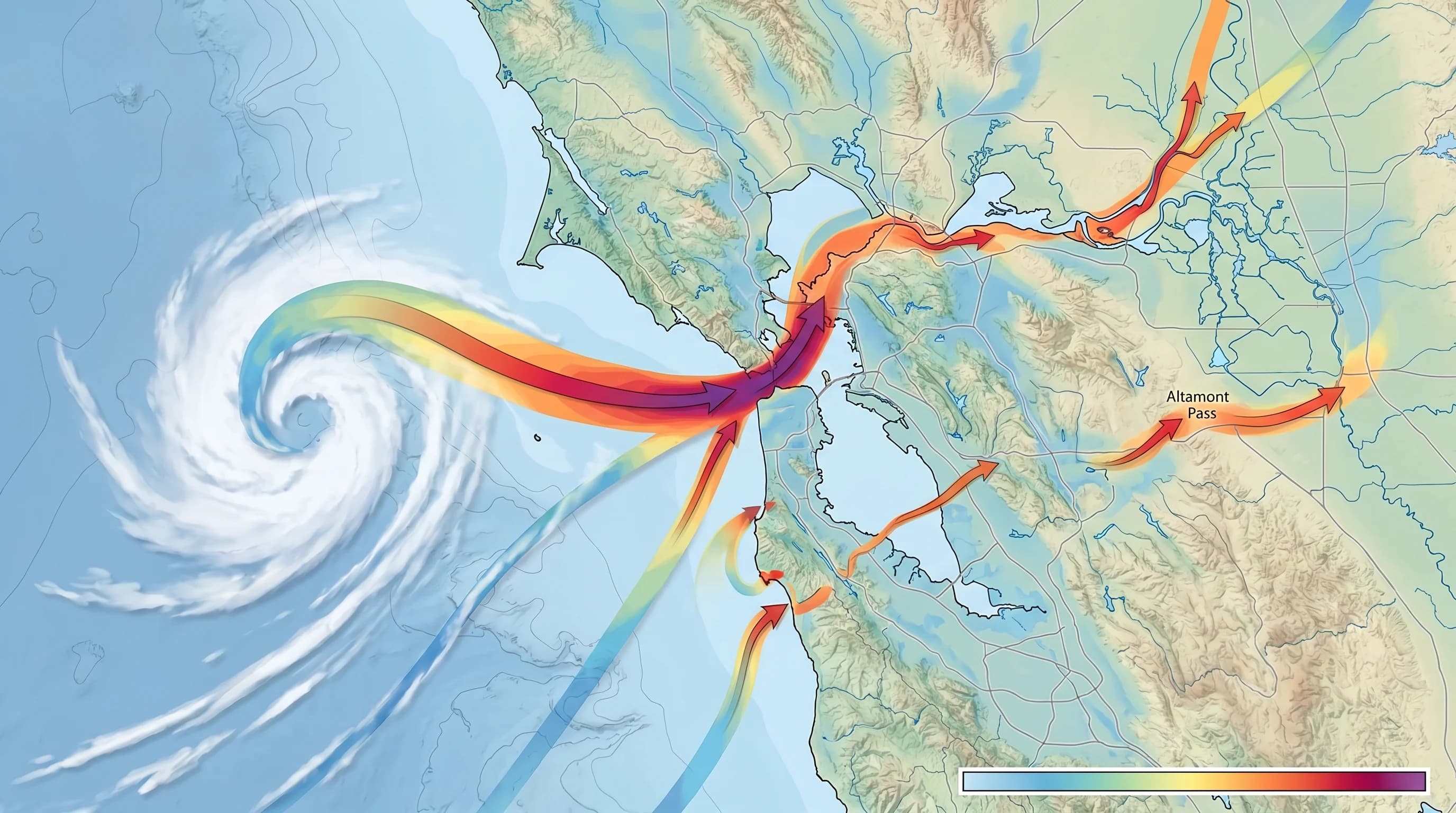
Geography does more than just create the pressure gradient. It channels and concentrates the resulting wind. Certain passages through the hills act like nozzles, compressing airflow and accelerating it. The Golden Gate is the most famous of these. The Pacific Ocean air that gets pulled toward the Bay has only a few gaps through which to flow, and the Golden Gate is the largest and most direct. The result is that the bridge, the Marin Headlands, and Crissy Field are almost always windier than areas just a few miles away in a different direction.
Altamont Pass works on the same principle from the inland side. The hills between the Central Valley and the Livermore Valley create a bottleneck, and the pressure-driven flow from high-pressure coastal air toward low-pressure inland heat squeezes through the gap and accelerates. Wind speeds at Altamont regularly exceed 25 mph in the afternoon during summer, which is why the wind farms there generate substantial power from what amounts to a reliable daily resource.
How Hills and Terrain Amplify Wind in Specific Places
Beyond the major corridors, the Bay Area's complex topography creates localized wind effects in almost every neighborhood and town. Ridgelines are windier than valleys. Exposed south-facing slopes get hit with afternoon sea breeze more directly. Valleys that align with the prevailing wind direction funnel air and experience higher speeds than valleys oriented perpendicular to the flow. This is part of why two locations a mile apart can have noticeably different wind conditions on the same afternoon.
The urban geometry of San Francisco adds another layer. The city's grid streets, many of them running in alignment with the prevailing marine air direction, create their own wind tunnels. Walking west along a straight street that faces the ocean can mean a stiff headwind even when the adjacent neighborhood is relatively calm. Long-term residents of the Outer Sunset or the Richmond understand this at a street-by-street level.
Wind as a Feature, Not Just a Problem
The same wind patterns that require jackets at summer outdoor events have made the Bay Area a hub for wind sports that few other urban regions can match. Crissy Field, Alameda, the Berkeley and Richmond shorelines, and several bay beaches are consistent windsurfing and kite surfing venues because the afternoon sea breeze shows up so reliably. On any summer afternoon from about 1pm onward, those locations see 15 to 25 mph winds with predictable direction. That kind of consistency is rare and valuable.
The wind also does something important for the region's livability: it keeps air quality remarkably good for a major metropolitan area. The constant onshore flow flushes inland pollution and prevents the stagnant air inversions that plague the Central Valley and parts of Southern California. Bay Area residents breathe better air partly because the geography that makes the region windy also keeps it swept clean. The wind is a trade-off, but the terms are generally favorable.