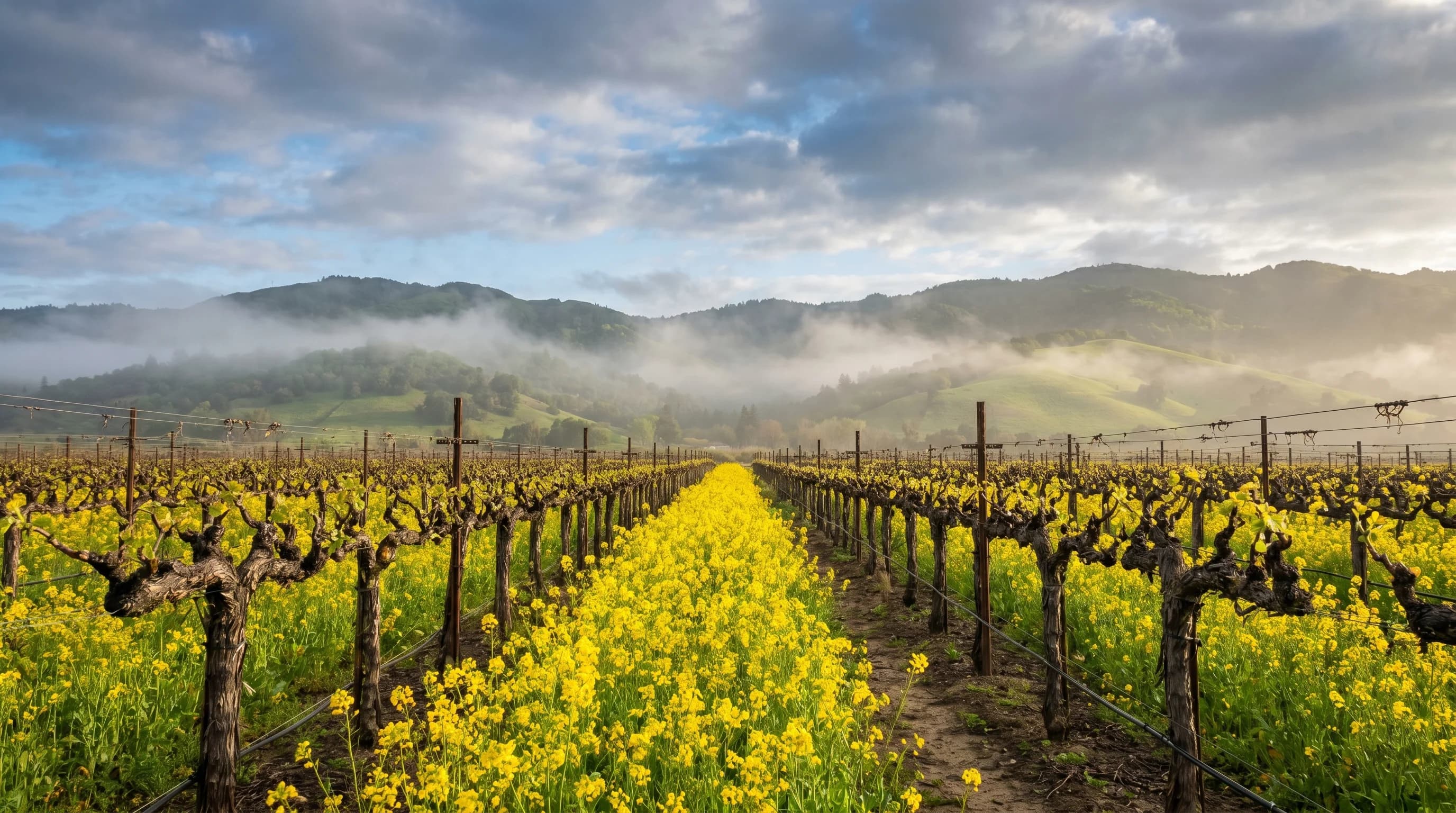
March in Napa Valley is the last month of the rainy season and the beginning of the growing season. Average highs reach 64 degrees F, mustard season is in its final weeks, and the valley floor is carpeted in bright yellow blooms between the dormant vine rows. Rainfall averages about 3.5 inches, down from the winter peak, and the storms that do arrive tend to be shorter and less intense than the atmospheric rivers of January and February. For visitors, March is a shoulder season that offers green landscapes, manageable temperatures, lower hotel rates, and a valley that feels more intimate than the packed harvest months.
What Are March Temperatures in Napa Valley?
March highs in downtown Napa average 64 degrees F, with lows around 42 degrees F. Calistoga runs a few degrees warmer during the day and a few degrees cooler at night due to its inland position and lower elevation relative to the surrounding mountains. Frost is still possible on clear, calm mornings, and vineyard managers watch temperatures closely: a late frost after bud break can damage the season's crop before it starts.
By late March, temperatures begin climbing noticeably. Afternoons in the upper 60s are common, and the occasional warm spell can push highs into the low 70s. These preview the warmer months ahead and make late March one of the most pleasant times to be outdoors in wine country.
Mustard Season and Spring Bloom
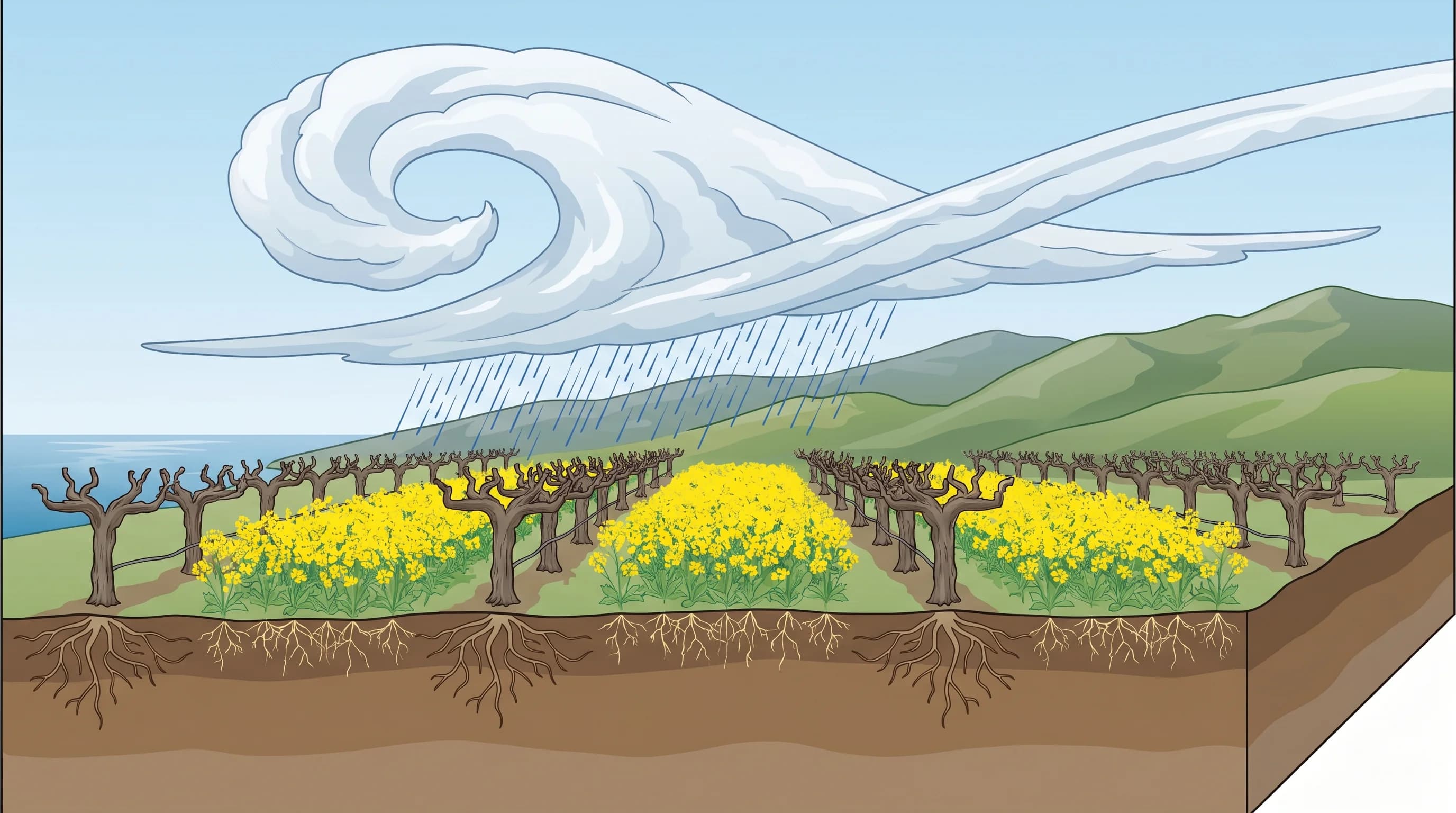
Napa's mustard season runs roughly from February through March, when wild mustard plants bloom between the dormant vine rows. The yellow flowers against the backdrop of bare vines and green hills create the landscape that has become one of Napa's most photographed scenes. Several wineries host mustard-themed events and dinners during this period. By late March, the mustard begins fading as vineyard crews disk the cover crop under to prepare for bud break.
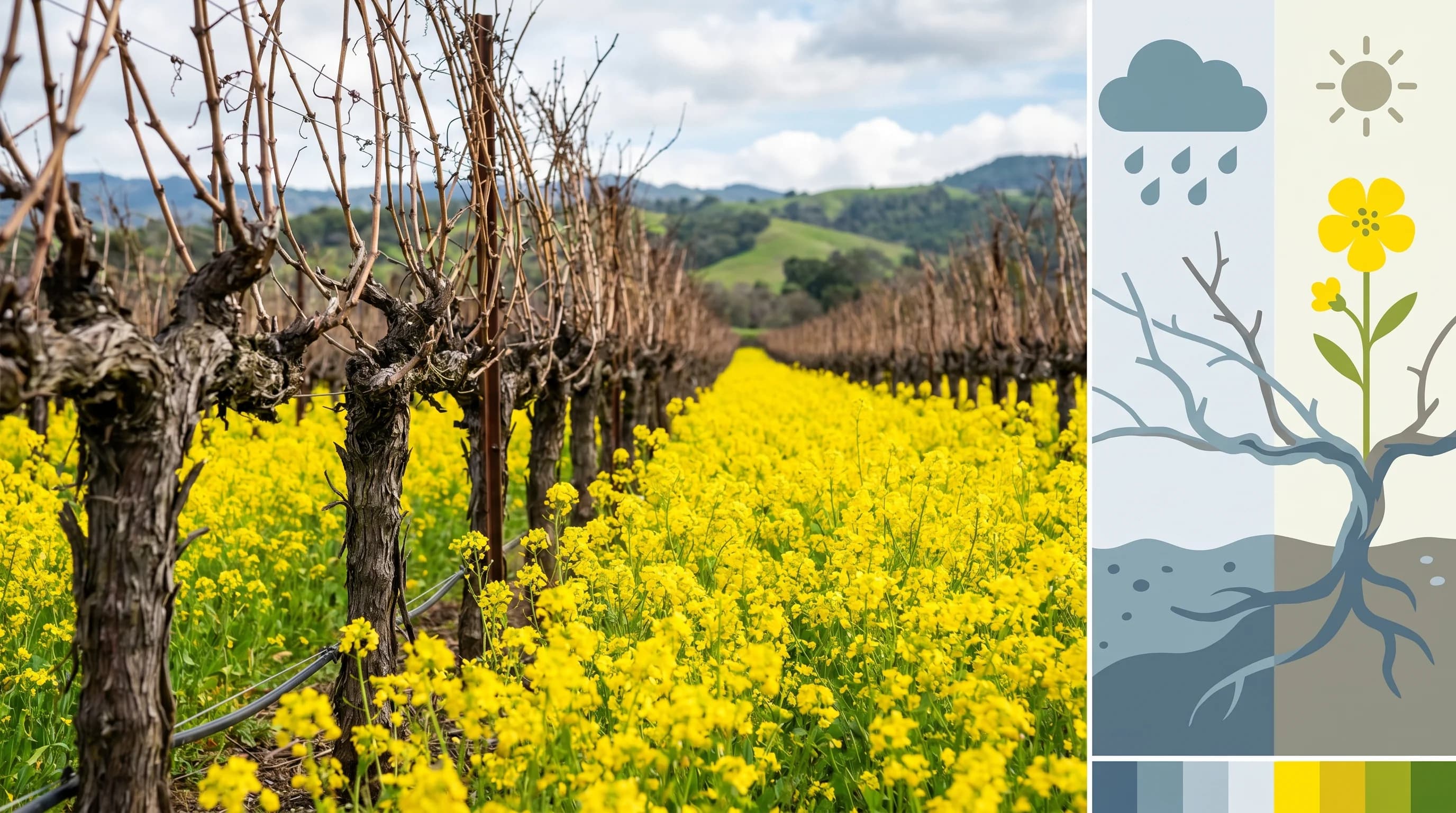
Bud break itself is a March event in most years. The dormant vines begin pushing new green shoots, signaling the start of the growing season. The timing depends on winter temperatures and accumulated heat: warmer winters produce earlier bud break, sometimes in late February, while cooler years push it into early April.
Rain in March
March rainfall in Napa averages about 3.5 inches across 8-10 rainy days. The rain typically comes in distinct storm cycles: two or three days of rain followed by several clear days. Between storms, March can deliver remarkably beautiful weather, with clear skies, mild temperatures, and the kind of washed-clean air that makes the valley feel vivid. The rain keeps everything green and feeds the Napa River, which runs at its highest flows during the wet season.
Visiting Napa in March
March is one of the best shoulder-season months for Napa visits. Hotels and restaurants are less crowded than harvest season, rates are lower, and winery tasting rooms are more relaxed. The weather is comfortable for outdoor activities between storms: hiking at Bothe-Napa Valley State Park, cycling the valley floor, and sitting on winery patios are all pleasant when the sun is out. Bring a rain jacket and layers, because March weather can shift from sunny and 68 degrees to rainy and 55 degrees within the same day. That unpredictability is part of the shoulder season charm: you are seeing the valley in its most natural, least manicured state, and the green landscape is the reward for a little flexibility.