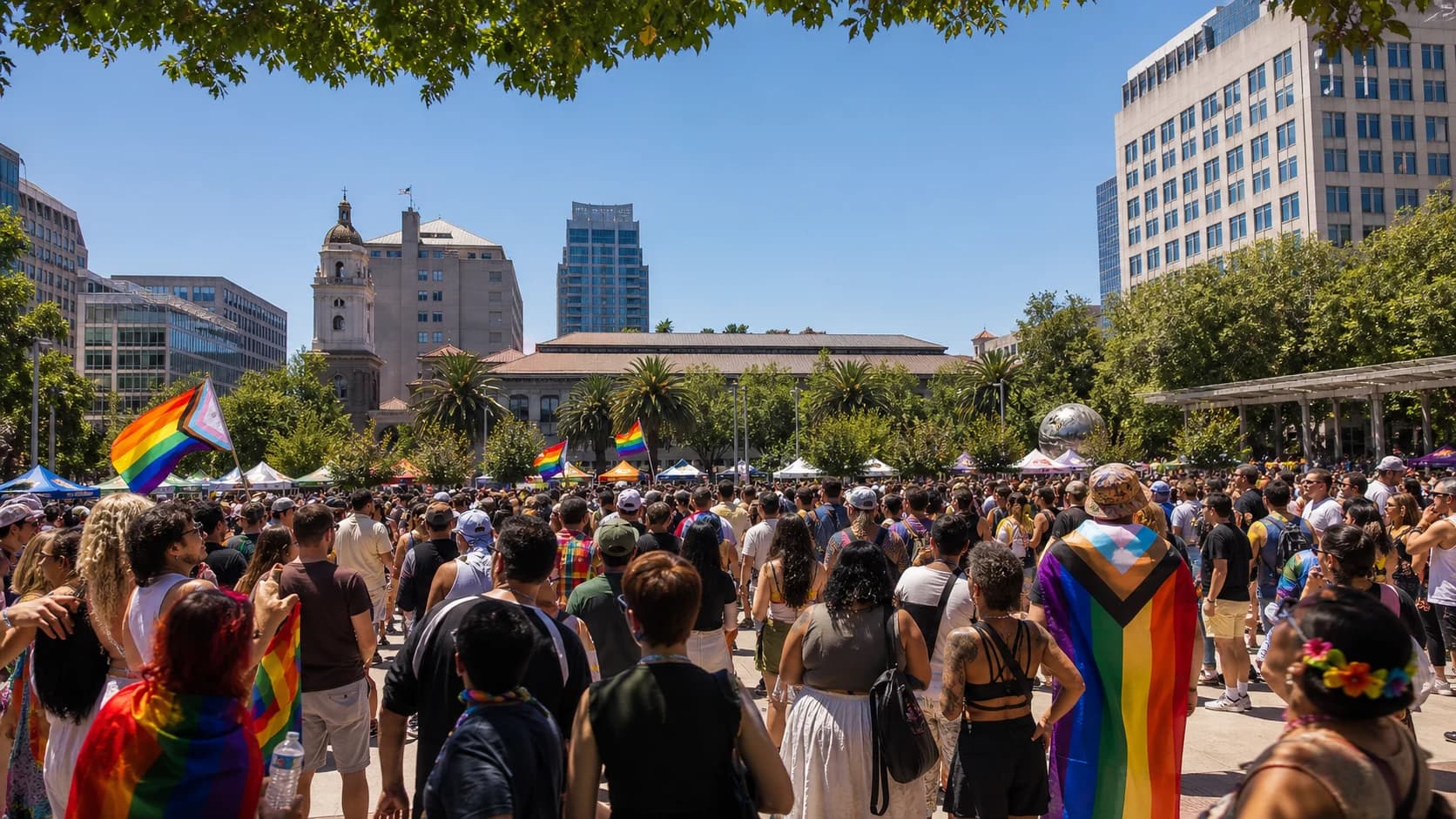
The full Silicon Valley Pride weather guide
When and where
Silicon Valley Pride uses downtown San Jose in two very different weather windows. Saturday begins near the end of the afternoon heat and continues after dark. Sunday puts marchers, spectators, vendors, and performers outside through the warmest part of the day. A useful forecast must treat those programs separately rather than average the entire weekend.
Silicon Valley Pride Parade and Festival takes place at Plaza de César Chávez and downtown San Jose in San Jose. For 2026, the official schedule lists a Saturday night festival from 6–11 p.m., then a Sunday parade from 11 a.m.–1 p.m. and day festival from noon–6 p.m. It is a two-part downtown celebration that shifts from a nighttime ticketed festival to a daytime street parade and outdoor plaza festival. That’s why this page uses the event’s own hours instead of the whole day: an overnight low says nothing about an afternoon festival, and a daily high says nothing about an evening program that runs after dark.
The dates and hours on this page are for this year’s event, and they link to the official event site. The organizers decide admission, closures, postponements, set times, and cancellations. This page covers the weather, and it doesn’t replace their announcements.
The venue, the typical weather, and the packing advice stay about the same from year to year. The dates don’t, so check them before you book anything.
Weather profile
Late August in downtown San Jose is normally warm, dry, and considerably sunnier than western San Francisco. Daytime heat builds over pavement and open plaza space, while evenings cool after sunset. The largest departures from that baseline are inland heat episodes, wildfire smoke, an unusually strong afternoon breeze, or a rare late-summer shower.
Those numbers describe a typical year, not a forecast. They tell you whether to pack a jacket, whether rain is worth planning for, and whether fog, heat, or wind is the usual problem here. They can’t tell you about a specific date. Use them for now, and switch to the actual forecast once event week gets close.
Weather can change a lot over short distances around here. An exposed park can be colder, cloudier, or windier than a sheltered plaza a few blocks away. Hills, water, and even the street layout change when weather arrives and how it feels. The forecast on this page is for a point at the venue, not a citywide average.
The temperature is only part of the story. Sun, shade, and wind change how a number feels over a long day outside. Pavement and crowds make a sunny plaza feel warmer than the reading, and shade and a steady breeze make an inland 70 feel considerably cooler. Look at the temperature together with wind and cloud cover instead of relying on one number.
Rain chance is the number people misread most. Twenty percent is the chance of measurable rain at all, not how long it lasts or how hard it falls. It could be a five-minute shower or the start of a real storm. What matters is when it falls. During event week, check whether the rain lands before the gates open, during the main program, or after everyone has gone home.
What weather can change the event
Direct sun and heat affect parade participants, people waiting at festival gates, families in the plaza, and crews working long shifts. Smoke can become the health story even with blue skies overhead. Ordinary clouds are mostly a comfort benefit. Rain is uncommon but can make painted street surfaces and crowded walking routes slick, while gusts affect flags, vendor displays, and temporary shade.
No single forecast number cancels an event. Organizers look at conditions on the ground, public safety, equipment, and where the weather is heading. A rain-or-shine event can still pause for dangerous weather, and a cloud icon doesn’t mean the day is ruined.
It’s usually a combination that causes trouble. Light rain with no wind is fine in a rain jacket. The same rain with strong gusts flips umbrellas, rattles signs and sound equipment, and makes waiting in the open miserable. Warm weather with shade and water is a different day from the same temperature on bare pavement. Low clouds are a minor comfort issue at one event and the whole story at another.
During wildfire season, check air quality separately. Smoke can arrive under clear skies, and a weather icon won’t show it. If fires are burning in the region, go by the official AQI, not by how the sky looks.
Lightning is rare here compared with most of the country, which is why people tend to underestimate it. If you hear thunder or organizers tell people to take shelter, go where they direct you. Don’t use a forecast page to second-guess a safety instruction. The same goes for flooding, damaging wind, extreme heat, and any emergency alert.
How to read the forecast
The summary card near the top of the page gives you the short answer. Once the event is about a week away, it’s based on the event’s hours, not the whole day. Under it are four numbers: temperature, rain, clouds, and wind. Below those is the weather that matters most for this particular event. Temperature and rain mostly tell you what to wear. Wind, fog, visibility, and smoke are more often what changes the day.
How much to trust the forecast depends on how far out you are. More than a week ahead, the typical weather on this page is a better guide than any specific forecast, which is why it’s shown first. Within a week, the day-by-day and hour-by-hour forecast is worth planning around. On the day itself, what’s happening outside, radar, and organizer updates beat any forecast.
For a multiday event, compare the same hours on each day instead of the daily highs and lows. For a one-day event, think about getting there, the main program, and getting home as three separate questions. An overnight shower doesn’t matter for a dry morning race, and the afternoon high tells you nothing about fireworks at midnight.
Some measurements sound alike but aren’t. Cloud cover isn’t cloud ceiling, visibility isn’t air quality, and a monthly average isn’t a forecast. Check the one that matches what you’re actually worried about.
Timing your day
For Saturday, compare the temperature and breeze at opening with conditions at the final performances. For Sunday, watch the 11 a.m.–6 p.m. heat curve and plan the most active walking before the warmest hours. If smoke is present, use the hourly AQI trend rather than assuming conditions stay constant all afternoon.
Ten to fourteen days out, the forecast is only good for the general pattern: warm, wet, or windy. Keep your plans flexible and ignore the hourly numbers. Around a week out, comparing event days starts to mean something. Two or three days out, it’s worth planning your arrival around the forecast. On the day, watch the trend and the official channels.
When this page says one day looks better, it’s comparing weather only. The lineup, crowds, ticket prices, and getting a ride aren’t part of that, and any of them can matter more than a few degrees. For a one-day event the real decisions are usually smaller: when to show up, what to bring, and whether to move an optional outdoor part of the day away from the worst weather.
Don’t chase small changes. Sixty-four degrees becoming sixty-three isn’t news. Rain moving into the headline set, fog hanging on two hours longer than expected, or gusts going from breezy to hard to stand in are worth paying attention to. The summary at the top of the page is written to flag changes like those and ignore the small stuff.
Treat prolonged Sunday heat and any health-relevant smoke as the conditions that can change the plan. For Saturday, the temperature and breeze during the final performances matter more than the daily high. Routine sunshine is not automatically perfect when the day includes hours on exposed pavement.
Venue microclimates
Plaza de César Chávez and the broad parade streets receive substantial sun, while building shade changes block by block. Dense crowds reduce airflow and make pavement heat more noticeable. The route, entry queues, and festival interior may therefore feel different at the same moment, even though one downtown forecast point represents all three.
A city forecast isn’t a venue forecast. The site might be closer to the ocean, farther inland, right on open water, tucked into a sheltered street grid, or on a slope. Those differences change the wind, the afternoon temperature, how far fog gets in, and how fast it cools off after sunset. The forecast on this page is for a point chosen to match the venue as closely as possible.
Conditions can also change within a large site. An exposed stage, grandstand, stretch of a race route, or waterfront edge can be colder and windier than a crowded, sheltered area. Grass stays wet after the rain stops, and pavement keeps radiating heat after the air cools. No forecast can map every corner of a venue, so the advice above focuses on the differences that come up again and again.
If you’re meeting a group, pick a meeting spot and agree on how you’ll reach each other before you arrive. Cell service gets overloaded at big events, and a sudden shower sends everyone toward the same covered areas. Save your tickets, a map, transit directions, and the organizer’s alerts page so they work offline. It takes a minute and saves a lot of hassle.
What to wear and bring
Use breathable clothing, sunscreen, sunglasses, and comfortable walking shoes for Sunday. Bring water only in a form allowed by the current entry policy. For Saturday, add a compact layer that still feels comfortable in a crowd after dark. Anyone sensitive to smoke should check AQI and follow public-health advice before leaving.
Layers are the default around here because what you need changes between the trip in, the waiting, the main program, and the trip home. A light jacket that blocks wind is usually more useful than one bulky coat. On a warmer day, wear something breathable and keep a light layer for the evening or the ride home. On a wet day, a rain jacket with a hood works better in crowds and wind than a big umbrella.
Bring sun protection even if the morning is cloudy. Low clouds can burn off, thin clouds still let UV through, and many event sites don’t have much shade. Water, sunscreen, sunglasses, and a hat that stays on all help. For cool evening events, add a warm middle layer, warm socks, and something dry to change into if rain is possible.
Check the official bag policy and list of prohibited items before you pack. Large umbrellas, hard-sided coolers, outside drinks, chairs, and professional cameras are often restricted, even when they’d make sense for the weather. The organizer’s rules come first.
If you’re bringing kids, older adults, or anyone with mobility needs or health conditions, plan around how long people will be exposed, not just the headline forecast. A long security line in sun, rain, cold, or wind can be harder than the event itself. It’s worth finding the accessible entrances, medical tents, water stations, and covered rest areas ahead of time.
Travel and contingency plans
Downtown street closures and a large crowd make VTA and other transit useful, but the parade changes normal circulation. Heat can make an extra transfer or long walk more consequential, while the Saturday finish concentrates departures late at night. Save the official route, transit plan, and a group meeting point before entering the festival.
Big events snarl traffic even in perfect weather. Rain slows buses, trains, and roads, heat sends more people to rideshare, and a late schedule change can send a whole crowd to transit at once. Leave extra time, and check the organizer, local transit agencies, and city alerts before you head out.
Have a backup in mind: a different arrival time, a different spot inside the venue, or an indoor option nearby if the weather turns. You don’t need to plan for every possible problem. You just don’t want the whole day to depend on one thing going right.
Weather and refunds are separate questions. “Rain or shine” usually means ordinary rain won’t get you a refund, but the terms vary by event. The organizer and ticket seller have the final word on admission and refunds.
The weather still matters on the way home. Evenings cool off fast, exposed spots stay windy, and rain or snow can pick up after the main event ends. Save one warm layer and know how you’re getting home, instead of using everything in the first hour.
Planning as the date approaches
A few weeks out, use the typical weather on this page to figure out what to wear, what the usual weather problem is at this venue, and whether you need a backup plan. Confirm the date, location, hours, entry rules, and transportation with the organizer.
About two weeks out, watch for a general pattern: warm, wet, smoky, or windy. The hour-by-hour timing will still change, but the pattern can tell you whether to keep more than one day open, book flexible transportation, or get ready for rain or heat.
A week out, compare the event hours day by day. Two or three days out, focus on when you’ll arrive, the main program, when you’ll leave, and any weather that could change the experience. On the day, check the latest conditions before you leave and again when you get there.
Make your plans more specific as the forecast firms up, but leave room for local surprises. If the organizer or public-safety officials say something different from the forecast, follow them. SFBayWeather is an independent weather site, not the event organizer.
FAQ
Silicon Valley Pride weather questions
When is Silicon Valley Pride 2026?
The festival is August 29–30, 2026, with a Saturday night festival and Sunday parade and day festival.
How hot does Silicon Valley Pride get?
Downtown San Jose can become warm to hot on late-August afternoons. The Sunday parade and festival overlap the warmest part of the day.
Will it be cold at the Saturday night festival?
It is usually mild at opening and cooler after sunset. A light layer is useful for the final hours.
Is Silicon Valley Pride rain or shine?
The official know-before-you-go page describes the festival as rain or shine, but organizers control any safety-related change.
What weather matters most?
Sunday heat and sun, Saturday’s evening cool-down, and wildfire smoke are normally more important than rain.
What should I bring?
Bring sun protection, comfortable shoes, and a light evening layer, while following the official bag and beverage rules.
Sources and methodology
- Silicon Valley Pride festival — Official 2026 dates, hours, venue, and program format
- Silicon Valley Pride parade — Official parade date, route, and step-off time
- Silicon Valley Pride know before you go — Current gate times, weather policy, and entry rules
- SFBayWeather downtown San Jose — Venue-level forecast and typical weather context