The full Fleet Week weather guide
When and where
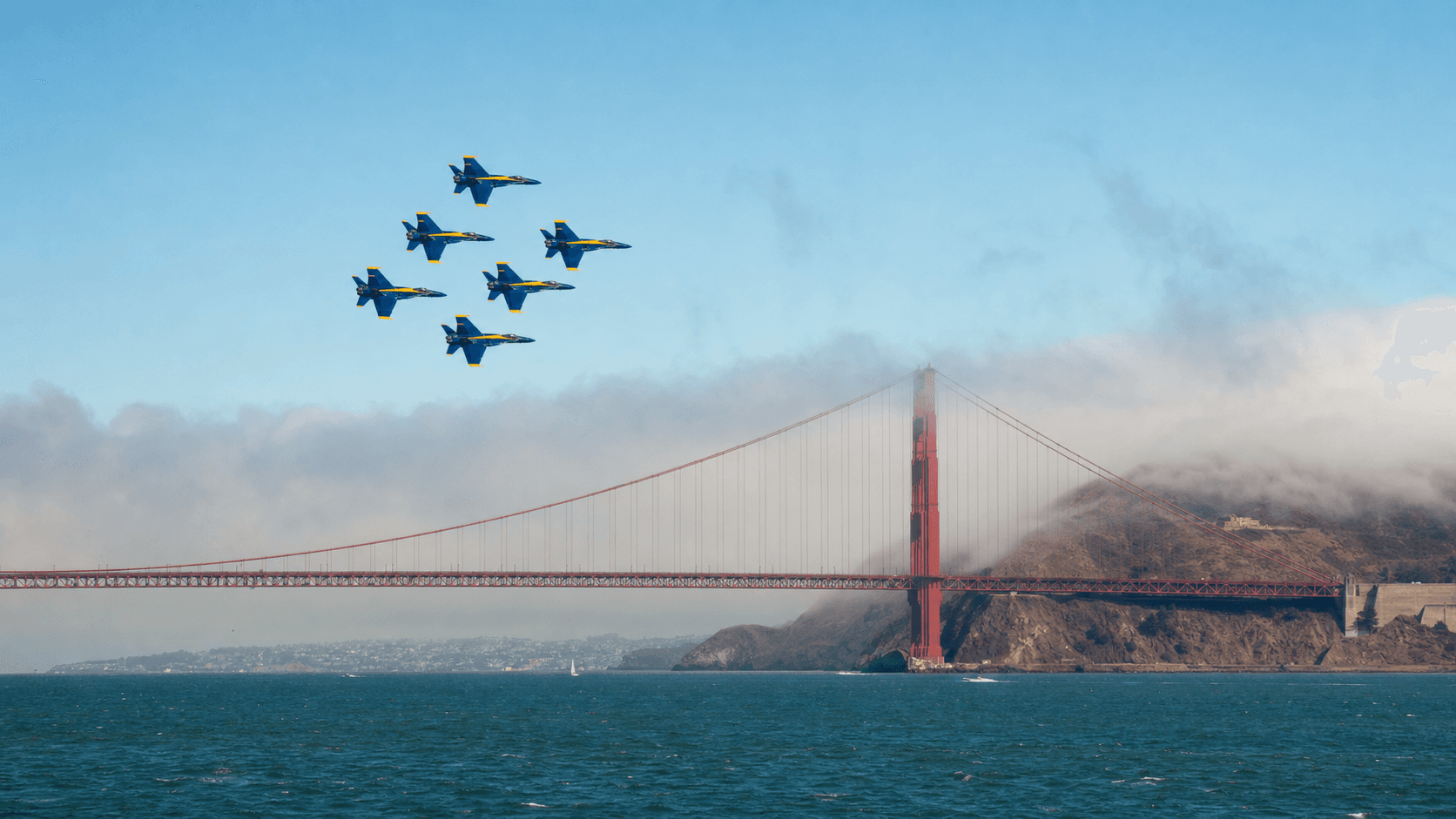
San Francisco Fleet Week is a citywide celebration, but the weather question most people mean when they search for “Fleet Week weather” is much more specific: what will conditions be over the northern waterfront when the air show is running? In 2026, the broader Fleet Week calendar runs October 4–12. The official air show is scheduled for Friday, October 9 through Sunday, October 11, from noon to 4 p.m. The flying takes place over San Francisco Bay between the Golden Gate Bridge and Alcatraz.
That geography matters. Marina Green and Crissy Field put spectators close to the center of the action, while Aquatic Park, Fisherman’s Wharf, Pier 39, the Marin Headlands, and Treasure Island provide different angles. They do not necessarily have the same weather. A bank of low cloud can enter through the Golden Gate while the eastern waterfront remains bright. A hilltop can be above a shallow layer, inside a deeper layer, or clear locally while the aircraft area remains obscured.
Fleet Week also includes the Parade of Ships, ship tours, Fleet Fest, concerts, and readiness events. Those activities respond to weather differently. Low clouds that restrict an aerobatic program may have little effect on a ship tour, while steady rain or strong wind can make hours in an outdoor line uncomfortable.
Use the official Fleet Week schedule for current dates, times, access rules, and operational changes.
What weather can change the Blue Angels show?
Cloud ceiling and horizontal visibility are the two most important published weather measurements for a Blue Angels demonstration. They describe different things. Visibility is how far a pilot can see horizontally. Ceiling is the height of the lowest broken or overcast cloud layer that aviation observers treat as a ceiling. A sky can have a great deal of high cloud without a low ceiling, and a low marine layer can produce a restrictive ceiling even when no rain is falling.
The Blue Angels prepare different versions of the demonstration for different ceilings. Good conditions allow the full high show, which contains the complete set of vertical maneuvers. A lower ceiling can lead to a low show or a more limited flat show. Conditions can also vary within the performance area: fog spilling across part of the show box can create a safety and visibility problem even if an airport observation or a spectator’s phone reports decent weather somewhere nearby.
Fog has had a real impact in San Francisco. During Fleet Week in 2024, the Saturday Blue Angels performance did not proceed after an observation flight because fog and cloud cover made the conditions unsafe. That is a useful example, but it is not a rule that every fog icon means cancellation. The depth, position, timing, and continuity of the cloud layer matter, and the operational decision belongs to the team and event organizers.
Weather is only one reason a program can change. Aircraft availability, airspace, safety, government operations, and event logistics can all affect a schedule. A favorable weather forecast does not confirm that flying will proceed; use official Fleet Week and Blue Angels updates for program status.
Blue Angels weather minimums
The official Blue Angels FAQ provides unusually clear public thresholds. A high show requires a cloud ceiling of at least 8,000 feet and at least three nautical miles of horizontal visibility from centerpoint. A low show can be performed with a ceiling of at least 4,500 feet and the same visibility minimum. A limited flat show normally requires a ceiling of at least 1,500 feet and three nautical miles of visibility. The FAQ notes that the FAA can waive the ceiling to 1,000 feet; any waiver or resulting program change would come through official channels.
Three nautical miles is about 3.45 statute miles. That unit difference is easy to miss because consumer forecasts in the United States usually display statute miles while aviation thresholds are often stated in nautical miles.
The thresholds are not a promise of a specific program. A modeled ceiling of 8,100 feet is not meaningfully “safe” while 7,900 feet is “unsafe,” especially several days ahead. Forecast error, cloud variation across the show box, and conditions at the exact performance time all matter. Treat a forecast near any threshold as marginal rather than as a firm yes or no.
Cloud cover is not a substitute for ceiling. A forecast showing 80 percent cloud cover could describe high clouds with plenty of room for a high show, or a low overcast that restricts vertical maneuvers. Likewise, low-cloud percentage is useful evidence of stratus but does not by itself reveal the base of that layer. Use an aviation ceiling forecast when one is available; total cloud cover alone cannot determine the show type.
Why Fleet Week fog is tricky
The Golden Gate is both the iconic background for the air show and a natural doorway for Pacific air. Cool marine air and low stratus can move through the gap, spread along the waterfront, and change the view over a short distance. San Francisco’s hills complicate the pattern further by steering low clouds and producing sharp neighborhood edges.
October is often clearer than midsummer. The National Weather Service describes fall as a transition season that usually brings more cloud-free days than the persistent stratus regime of summer. It is also the season when dry offshore flow can produce some of the city’s warmest weather. Neither fact eliminates fog. A localized bank near the bridge can matter greatly to an air show centered on the northern Bay even on an otherwise pleasant day.
Fog timing is especially difficult more than a week ahead. The broad pressure pattern may suggest an onshore or offshore setup, but the hour when a shallow deck clears—or the minute it pushes back through the bridge—depends on small changes in wind, inversion strength, moisture, and inland heating. Check the day-by-day outlook one week before the show, then give observations and the immediate trend more weight on event day.
Ground-level fog, low cloud, and ceiling should also be read separately. Ground fog reduces what a spectator can see around them. A low cloud deck above the ground can leave local visibility good while still limiting vertical maneuvers. The show box can be obscured even when an inland viewpoint is sunny. The reverse can happen too: a viewer may stand inside cloud on an exposed hill while the lower waterfront and aircraft area are clearer.
How to read the dashboard
Start with the verdict, then verify the reason. The verdict compares the scheduled event windows rather than entire calendar days. If Saturday receives the best rating, that means its noon–4 p.m. combination currently looks better than the comparable Friday and Sunday windows; it does not mean every hour Saturday is perfect.
Temperature tells you how the afternoon will feel, while rain probability helps with clothing and waiting outdoors. Total clouds describe the overall sky. Wind and gusts matter for exposed waterfront comfort and can affect maritime activities. For the air show, also check ceiling, visibility, and low clouds near the Golden Gate.
On show day, airport METAR observations can provide regional context, but KOAK and KSFO are not Marina Green or the show center. Use Crissy Field conditions for waterfront comfort and official event updates for the program itself.
When two days look nearly identical or a ceiling forecast sits near a show threshold, small forecast changes can reverse the ranking. Recheck after the next forecast update rather than treating a tiny difference as decisive.
Best viewing spots for different fog patterns
Marina Green is the classic central viewing area and the location of the Parade of Ships reviewing stand. It offers a broad view toward the air-show box, but it is exposed to wind and close enough to the Golden Gate that incoming low cloud can become a direct problem. Bring layers even when the city forecast sounds mild.
Crissy Field sits farther west, close to the bridge and often directly under the action. It can be spectacular on a clear day, but it is one of the first major viewing areas to feel a marine push through the Golden Gate. Local wind is also a bigger comfort factor here than in sheltered neighborhoods. Crissy Field conditions are useful for attendee comfort but are not the same as aviation conditions across the full show box.
Aquatic Park and the Fisherman’s Wharf–Pier 39 corridor sit farther east. In some patterns they remain clearer than the bridge approaches, and they provide easier access to food, transit, and other Fleet Week activity. The tradeoff is distance and viewing angle. A locally clear sky at Pier 39 does not help if fog is covering the aircraft area to the west.
The Marin Headlands and Hawk Hill offer elevation and a dramatic perspective. Elevation can put a viewer above a shallow marine layer, producing memorable views of fog flowing through the Gate. A deeper layer can instead wrap the hills in cloud, and exposed ridges may be much windier and colder than the city. Road access, parking controls, and crowd rules should be checked with the relevant land manager before choosing this option.
Treasure Island looks west across the Bay and can provide an unobstructed regional view. It is farther from the center of the air show, and haze or a fog bank over the northern waterfront can still block the main action. Its value is the different angle, not a guarantee of clearer show conditions.
No viewing spot is universally best. The most useful recommendation depends on the position and depth of low cloud, not simply the weather icon for “San Francisco.” During the week before the event, compare local comfort and visibility at your viewing spot with ceiling and visibility across the show box.
What to wear and bring
Dress for an exposed San Francisco waterfront afternoon, not for the temperature at your hotel or an inland Bay Area city. A light wind-resistant jacket over flexible layers is the safest default. The same afternoon can move from sunny and warm to breezy and gray, especially near Crissy Field and Marina Green. A layer that blocks wind is usually more useful than a bulky insulated coat.
Bring sun protection even when the morning starts cloudy. Fall offshore-flow days can be warm and bright, and waterfront spectators may spend several hours without much shade. Sunscreen, sunglasses, water, and a hat that can handle wind all help. On a cooler onshore day, long pants and a warm mid-layer make the waiting periods more comfortable.
If showers are possible, choose a compact waterproof layer instead of relying on an umbrella in a crowd or strong breeze. Protect phones and camera gear from drizzle. Photographers should pay attention to both wind and moisture, particularly on exposed viewpoints.
Ship tours have their own safety and security rules. The official Fleet Week information prohibits open-toe shoes and high heels on ships and limits bags. Those rules are separate from weather advice and can change, so check the official ship-tour page before leaving home.
Rain, wind, and other Fleet Week events
Cloud ceiling is unusually important to the air show, but it is not the only weather story during Fleet Week. Rain can make long outdoor waits uncomfortable, reduce visibility, and alter crowd behavior even when an individual activity has not been officially canceled. A brief shower and an all-day front require different plans.
Wind affects each part of the week differently. Stronger waterfront gusts can make a mild temperature feel cold, complicate blankets and shade structures, and matter to small boats. Follow official marine and event instructions for the Parade of Ships and public vessels.
Warm October weather deserves attention too. Dry offshore flow can suppress the marine layer and produce excellent visibility while raising heat and sun exposure. Clearer is not automatically more comfortable, particularly for children, older adults, and anyone spending much of the day in a crowded unshaded area.
Fleet Fest, concerts, readiness exhibits, and ship-tour lines may continue under cloud conditions that restrict flying. A weather change may affect one activity without canceling Fleet Week as a whole, so check the official status of the specific activity you plan to attend.
FAQ
Fleet Week weather questions
Will fog cancel the Blue Angels in San Francisco?
Fog can alter or prevent a demonstration when it lowers cloud ceiling or visibility in the show box, but only the Blue Angels and event organizers make the official decision. A forecast can show whether conditions are near the published weather tiers, but it cannot confirm a cancellation.
What cloud ceiling do the Blue Angels need?
The official Blue Angels FAQ says a high show requires at least an 8,000-foot ceiling, a low show at least 4,500 feet, and a flat show normally at least 1,500 feet. The FAA can waive the flat-show ceiling to 1,000 feet.
How much visibility do the Blue Angels need?
The published minimum is three nautical miles horizontally from centerpoint. That is approximately 3.45 statute miles.
Which Fleet Week day has the best weather?
The forecast can meaningfully compare the Friday, Saturday, and Sunday show windows beginning one week before the event. Farther out, day-by-day differences are too uncertain to rank.
What time is the 2026 Fleet Week air show?
The official 2026 Fleet Week page lists the air show for noon–4 p.m. on October 9, 10, and 11. Detailed performer timing is expected closer to the event.
Where is the best place to watch when fog is near the Golden Gate?
Farther-east locations such as Aquatic Park or Pier 39 can sometimes remain locally clearer than Crissy Field, but the show box itself must also remain visible. Compare both the local viewing forecast and the show-box assessment.
What should I wear to Fleet Week?
Wear flexible layers with a wind-resistant outer layer, and bring sun protection and water. Exposed waterfront locations can feel substantially cooler than sheltered parts of San Francisco.
Does rain cancel Fleet Week?
Fleet Week contains many separate activities, so there is no single weather rule for the whole week. Check the official status for the activity you plan to attend.
What weather most often changes the Blue Angels show?
Low cloud or fog near the Golden Gate and show box is the most common concern. It can lower the aviation ceiling or reduce visibility even when other parts of San Francisco are sunny.
Is SFBayWeather the official Fleet Week status?
No. SFBayWeather provides independent weather guidance. The official status strip links to the organizer, whose decisions control the program.
Sources and methodology
- San Francisco Fleet Week Air Show — Official 2026 dates, hours, location, and lineup updates
- San Francisco Fleet Week Calendar — Official weeklong schedule
- U.S. Navy Blue Angels FAQ — Published cloud-ceiling and visibility minimums
- U.S. Navy Blue Angels 2026 schedule — Official San Francisco performance dates
- National Weather Service climate of San Francisco — Local fog, wind, microclimate, and fall weather context
- San Francisco Fleet Week ship tours — Official dates, locations, footwear, and bag rules